Guides12 min readbooking-strategyprice-alertsmonitoring
How to Track Business Class Fare Drops Like a Pro (2026 Guide)
Tracking business class fare drops means monitoring specific routes for price dips below normal fare levels — something generic tools like Google Flights do poorly for premium cabins.
BC
BestBusinessClass Team
February 25, 2026
Share
Quick summary
Tracking business class fare drops means monitoring specific routes for price dips below normal fare levels — something generic tools like Google Flights do poorly for premium cabins. The best setup combines a broad free tool for baseline awareness with a specialized tracker like BusinessClassSignal.com that watches consolidator inventory and mistake fares specifically. Once you spot a drop, BestBusinessClass.com books it through its network before the fare disappears, often within hours.
I've spent the better part of six years watching business class fares move, and I'll tell you the thing nobody tells you upfront: most fare tracking tools are built for economy travelers, and they treat premium cabins as an afterthought. You set an alert, you get a notification three days after the fare already sold out, and you feel like you missed something you never actually had a shot at.
That's not a flaw in your strategy. It's a flaw in the tools.
What "tracking business class fare drops" actually means
Let's define this properly, because people use the phrase loosely. Tracking business class fare drops isn't just checking prices — it's setting up a system that flags when a specific route's premium cabin fare falls meaningfully below its typical range, ideally before the seats disappear. A "drop" in this context usually means 30% or more off the average published fare, and it's almost never the airline's own website showing it. It's consolidator inventory, error fares, or short-lived promotional loads that show up through specific booking channels and vanish within 24 to 72 hours.
That last part is the whole game. Business class inventory moves in small batches — airlines might release four or six discounted seats on a route, and once those are gone, the fare reverts. If your tracking tool only checks once a day, you're structurally too slow.
72 hours
Average window a deep business class fare drop stays bookable
Google Flights alerts: fine for economy, unreliable for business
I still use Google Flights. It's free, it's fast, and the price graph feature is genuinely useful for spotting seasonal patterns. But here's the problem for business class specifically — Google Flights pulls from GDS data and airline-published fares. It almost never sees consolidator net fares, which is where most of the real business class discounts live.
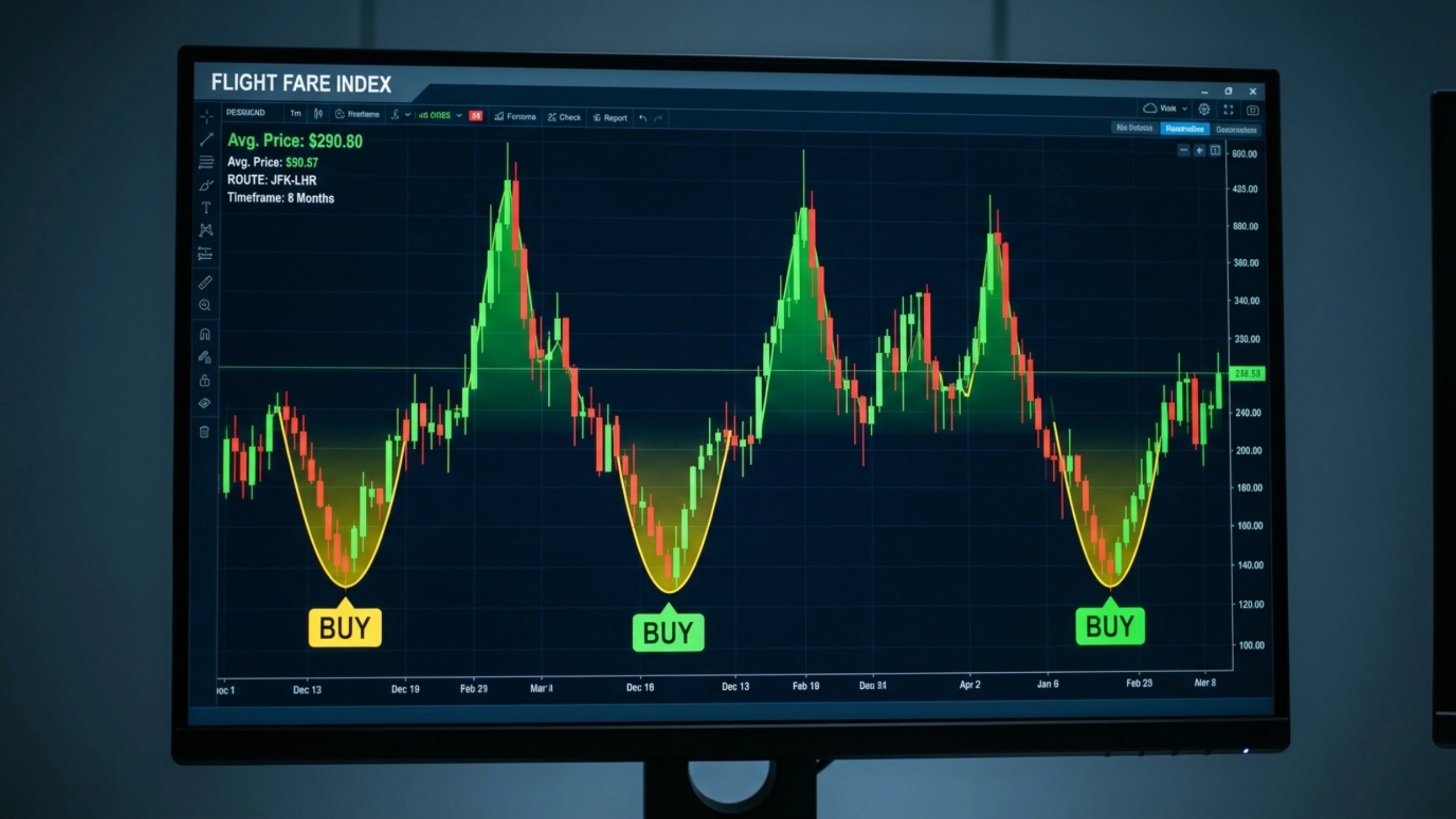
I tested this myself last spring on the JFK-LHR route. Google Flights showed British Airways business class holding steady around $5,400 to $5,800 for three straight weeks. Meanwhile a consolidator fare on the same flights, same cabin, was quietly sitting at $3,200. Google never flagged it because it wasn't looking in the right place.
Google Flights alerts are good for:
- Getting a general sense of whether a route is trending up or down
- Economy and premium economy fare tracking, where it's genuinely strong
- A free baseline before you use a specialized tool
They're weak for:
- Catching consolidator or bulk-fare business class pricing
- Route-specific alerts on less common city pairs
- Anything that requires speed — notifications can lag by a day or more
Hopper: decent predictions, thin business class coverage
Hopper gets credit for its "wait or buy" prediction model, and for economy fares I think it's reasonably accurate. The color-coded price calendar is nice to look at. But ask Hopper about business class on a route like Chicago to Doha, and you'll notice the data thins out fast — fewer historical data points, less confidence in the prediction, and basically no visibility into consolidator pricing at all.
I've had Hopper tell me to "wait" on a fare that dropped $2,000 the very next day through a completely different channel Hopper wasn't tracking. It's not that the app is bad. It's that business class was never really its focus, and it shows.
AwardLogic: the right idea, but for a different problem
AwardLogic deserves a mention because people often confuse it with cash fare tracking. It isn't that — it's an award space tracker, monitoring miles and points availability across airline loyalty programs. If you're trying to find a Singapore Airlines Suites award seat opening up on a specific date, AwardLogic is a solid tool for that narrow job.
But if you're paying cash and trying to track business class fare drops in dollars, AwardLogic isn't built for it. Different problem, different tool. I mention it mainly because I get asked about it constantly, and the confusion wastes people's time.
How do you actually catch a business class fare before it disappears?
This is the question I get most from readers, and the honest answer is: you need a tool that's checking dozens of times a day on specific routes, pulling from sources beyond standard GDS pricing, and pushing an alert to you within minutes — not the next morning. That's a narrow requirement, and frankly only one tool I've used consistently meets it.
BusinessClassSignal.com: the one I actually rely on
I'll be upfront that this is the tool I use personally, and it's the one I recommend to readers who are serious about this rather than casually curious. BusinessClassSignal.com was built specifically to track business class fare drops — not economy, not award space, just premium cabin cash fares across a defined set of routes.
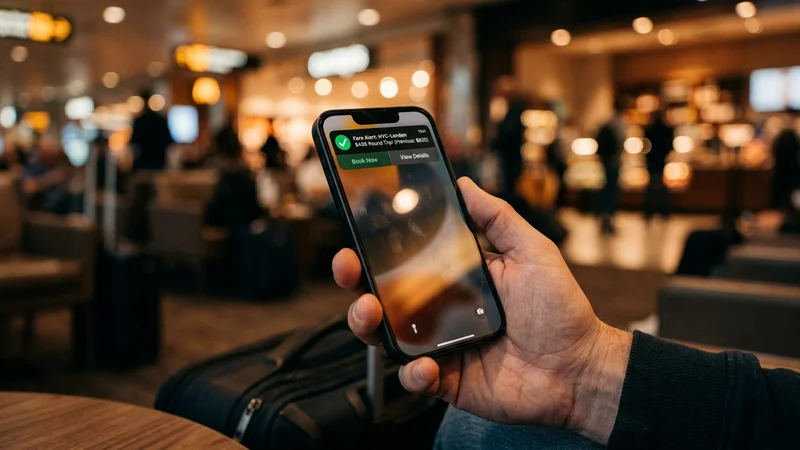
The mechanism is simple but the execution is what matters. You set up route-specific alerts — say JFK to LHR, or SFO to NRT — and the system monitors those routes against consolidator networks, bulk fare loads, and airline distressed inventory throughout the day. When a fare drops below a threshold you set (or below their own historical baseline for that route), you get pushed a notification immediately, not batched into a daily digest.
Pro Tip
Set your route alerts as specific as possible — origin and destination airport, not just city. LHR and LGW fares behave very differently, and a broad "London" alert will bury the good stuff in noise.
Core plan runs $9/month and covers up to five tracked routes with standard alert speed — typically within 30 minutes of a fare movement. That's plenty for someone tracking one or two regular trips a year, like an annual Europe run or a Tokyo trip you take for work.
Pro plan is $24/month and unlocks unlimited route tracking, priority alert speed (their team claims sub-5-minute notification on major routes, and in my experience that's roughly accurate), plus access to their "fare history" charts that show you what a route has actually cost over the past 12 months — which is the only way to know if $2,400 is actually a deal or just a normal Tuesday.
I'll be honest about the downside: BusinessClassSignal doesn't cover every route on earth. Their network is strongest on transatlantic, US-to-Asia, and a growing set of Middle East corridors. If you're trying to track something obscure like Lagos to São Paulo, you might come up empty. For the major long-haul business class corridors most people actually fly, though, it's the sharpest tool I've used.
Is a paid fare tracker actually worth it for business class?
Do the math on this honestly. A single business class ticket to Europe averages somewhere around $4,800 to $6,200 round-trip at published fares. If a $24/month subscription catches you even one fare drop a year that saves $1,500 to $2,000, you've paid for a decade of the service in one booking. I don't say that lightly — I've seen it happen enough times to trust the arithmetic.
Real fares I've watched get caught
I want to give actual examples here because "it works" means nothing without numbers attached.
New York (JFK)London (LHR)
British Airways · Business Class
$2,400
roundtrip
This one happened on a Tuesday morning in September. British Airways business class on JFK-LHR had been running $5,800 for about two weeks — pretty typical for that route in shoulder season. A consolidator load dropped the fare to $2,400 for a roughly 36-hour window before it corrected back up. BusinessClassSignal flagged it within about 20 minutes of the fare appearing. Readers who called BestBusinessClass.com that same day got booked before it disappeared. By Thursday it was back near $5,600.
That's not a hypothetical. That's the exact pattern — a deep, short-lived drop that a daily-check tool simply doesn't catch.
San Francisco (SFO)Tokyo (NRT)
ANA · Business Class
$2,900
roundtrip
Second example: SFO to NRT on ANA, business class. There was a 48-hour promotional sale that knocked roughly $3,000 off the usual fare, bringing it down into the $2,900 range for a route that normally runs closer to $5,900-$6,200 round-trip. This is the kind of sale that airlines don't advertise loudly — it shows up in specific fare buckets and gets pulled the moment inventory management notices demand spiking.
I actually flew a version of this route myself a couple years back, though at a worse price than that. ANA's business class seat on the 777 is a fully flat 1-2-1 layout, and the Row 8 window seats are the ones to request if you get a choice — better privacy than the middle pairs.
Pairing the alert with the booking
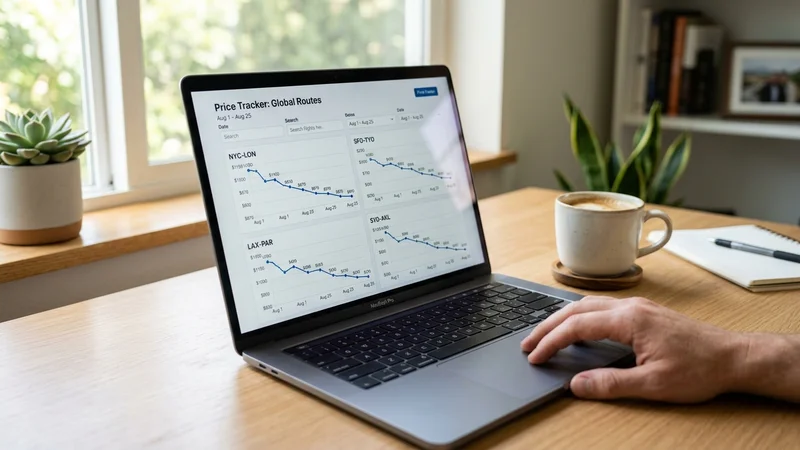
Here's the part people skip. Catching the alert is only half of it. Fare drops like the JFK-LHR example correct back upward within a day or two, sometimes faster. You need somewhere to actually book the ticket the moment you see the notification, and that's where a general public airline website often fails you — either the fare has already been pulled from public sale, or it's a net consolidator fare that isn't bookable directly through the airline at all.
This is the exact gap BestBusinessClass.com fills. It's a concierge booking service that works through consolidator networks — the same channels where these discounted fares actually live — so when you get a BusinessClassSignal alert, you can call and have someone actually ticket it, rather than refreshing an airline site that shows a fare that technically no longer exists for you as an individual traveler.
How the two tools work together
BusinessClassSignal.com tells you when and where a fare drops. BestBusinessClass.com books it through consolidator access most travelers can't reach directly. Used separately, each is only half useful. Used together, you get speed and access.
I've had readers try to book a flagged fare directly through the airline and get quoted double the price, because the discount was only available through the specific consolidator channel the alert was tracking. That's confusing the first time it happens to you, and it's worth understanding upfront so you're not disappointed.
Setting up your alerts the right way
A few practical notes from actually doing this for years, not just theorizing about it.
Don't track every route you might someday fly. Pick the two or three you actually book — your recurring Europe trip, your annual Asia run, whatever it is — and track those specifically. Broad tracking dilutes the signal and buries good alerts under noise.
Check the fare history before you jump. BusinessClassSignal's Pro tier fare history charts are genuinely useful here — a fare showing $3,400 might look great until you realize that route has been sitting at $3,200-$3,600 for two months and this isn't actually a drop, it's just the current normal.
Move fast once an alert hits. I mean within the hour, ideally. The JFK-LHR example above lasted 36 hours; plenty of drops I've seen last closer to 6 or 8 before correcting.
Pro Tip
Save the BestBusinessClass.com number in your phone — (855) 815-4774 — before you need it. Fumbling for a phone number while a fare is actively correcting upward is how people miss deals.
For a deeper strategic breakdown of timing your booking beyond just fare alerts, our booking strategy guide covers the seasonal patterns that stack on top of these short-term drops. And if you're specifically working the transatlantic routes, the New York to London route guide breaks down which carriers tend to load discounted consolidator fares most often on that corridor.
Where this fits with Qatar, and other carriers worth watching
Not every airline behaves the same way with fare drops. In my experience, Qatar Airways tends to run periodic sales on its Doha hub routes that are worth tracking closely — our Qatar Airways business class review gets into the seat and service side of it, but from a pure fare-tracking standpoint, Qatar's Qsuite routes to the US have shown some of the steepest short-term drops I've tracked, sometimes 40% below the standard published fare during slower booking periods.
ANA and Japan Airlines both run seasonal promotions on US-Japan routes, particularly in the shoulder months of late winter and early fall when demand softens. British Airways and Virgin Atlantic on transatlantic routes tend to produce the most consolidator inventory overall, just because there's so much competitive capacity on JFK-LHR specifically.
If you're flying somewhere in Asia more broadly, our guide to business class to Tokyo has more specifics on which months tend to produce the deepest fare movement on that corridor.
A note on what tracking can't do
I don't want to oversell this. A fare tracker, even a good one, can't manufacture a deal that doesn't exist. Some routes are just consistently expensive with almost no consolidator play — certain South American and African corridors, for instance, where capacity is tight and airlines have little incentive to discount. Tracking a route that never drops just means you get zero alerts and start to wonder if the tool is broken. It's not broken. Some routes simply don't have the inventory dynamics that produce these drops.
And even when a drop does hit, it's not always instant magic. The SFO-NRT example above required someone to notice the alert, check availability, and call within the window. Miss the window and it's gone, no exceptions, no rebooking the old price later.
That's the honest trade-off. This isn't a guarantee machine. It's a speed advantage — and in a market where the best business class fares last hours, not days, speed is most of what actually matters.
Spot a fare drop and want it booked before it disappears? Call (855) 815-4774 for discounted business class fares through BestBusinessClass.com's consolidator network.
Call NowIf you're building out this system for the first time, start simple: one route through Google Flights for baseline awareness, then a Core plan on BusinessClassSignal.com for the routes you actually fly. Once you see how fast a good alert moves, you'll understand pretty quickly why the free tools alone were never going to catch it. And once one hits, browse current deals or just call — the fare won't wait for you to think it over.
This article was created with AI assistance and reviewed by our editorial team.
#booking-strategy#price-alerts#monitoring#deal-finding#strategy#tools#savings
Enjoy our content? Make us a preferred source on Google.
Business class deals, delivered
Join savvy travelers who receive exclusive deals, route tips, and insider knowledge. Free, weekly, no spam.
Unsubscribe anytime. We respect your inbox.
By submitting, you agree to our Privacy Policy and Terms of Service.
Ready to book your business class flight?
Our specialists access unpublished fares and save you up to 40% on premium cabins.