Route Guides13 min readroute-guidetransatlanticlondon
Washington DC to London Business Class: Nonstop Carriers, Lounges & Best Fares (2026)
Washington Dulles (IAD) is one of the most underrated transatlantic business class gateways in the country, with three nonstop carriers to London — British Airways, United, and Virgin Atlantic — all…
BC
BestBusinessClass Team
July 2, 2026
Share
Quick summary
Washington Dulles (IAD) is one of the most underrated transatlantic business class gateways in the country, with three nonstop carriers to London — British Airways, United, and Virgin Atlantic — all flying newer widebodies with genuinely good hard products. Published fares run $4,200–$7,500 round-trip, but BestBusinessClass.com routinely books the same seats for $1,700–$2,900 through consolidator fares. If you're flexible on dates, IAD beats JFK for value even though New York has more airline options.
I've flown out of Dulles more times than I can count, mostly for work, and for years I assumed it was the weak link in the DC-to-London equation. Big, sprawling, those mobile lounges that feel like a relic from 1985. But the actual flying part — the nonstop options to Heathrow — has quietly become one of the better transatlantic business class propositions in the US. Three airlines, three different cabins, and because they're all fighting for the same government contractors and consultants who fly this route weekly, the consolidator pricing is unusually good.
Let's get into what's actually on offer.
The three nonstop options from IAD
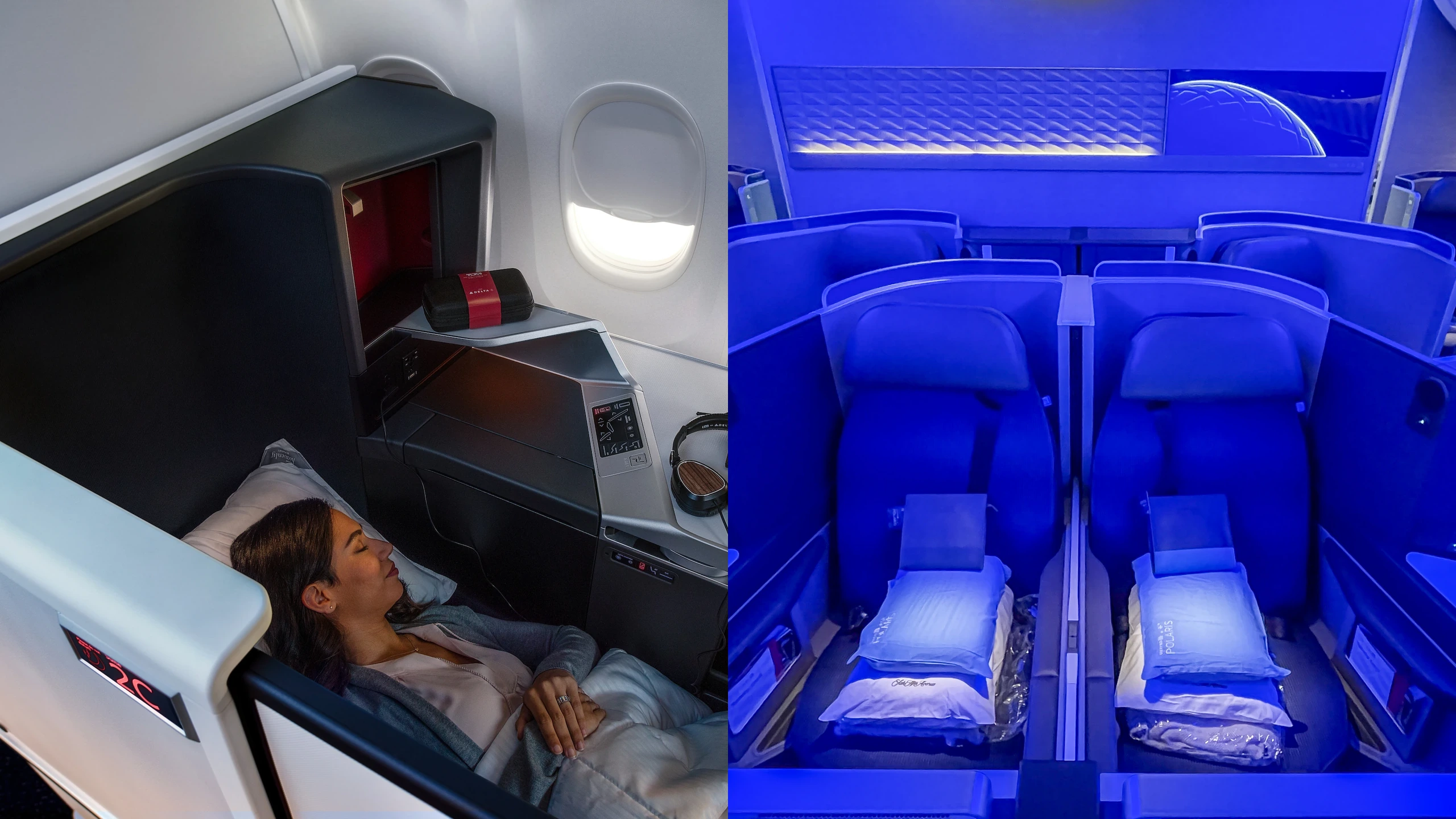
There's British Airways, United, and Virgin Atlantic, and they're not interchangeable. Each one has a genuinely different seat, a different lounge experience at Dulles, and a different personality once you land at Heathrow.
$1,700–$2,900
Typical BestBusinessClass consolidator fare, IAD–LHR round-trip
British Airways — the best seat on the route
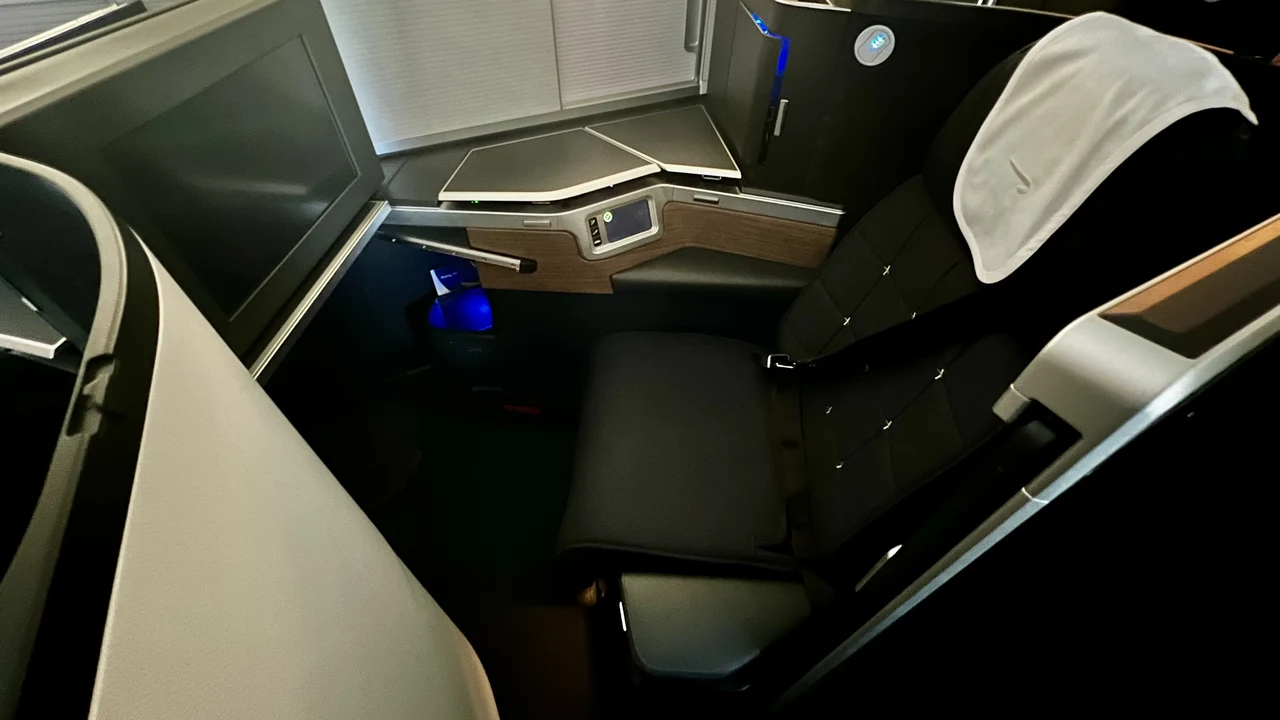
BA flies the A350-1000 on this route most days, and that's the plane you want. It's got the Club Suite — BA's door-equipped, fully flat business seat that finally brought them into this decade after a decade of that cramped 2-4-2 Club World layout everyone complained about. I wrote up the seat in detail in my BA Club Suite review, but the short version: it's a proper suite with a closing door, direct aisle access from every seat, and enough storage that you're not fighting your own bag for legroom.
The catch is BA doesn't always fly the A350 on IAD — occasionally you'll get an older 777 with the old Club World seat, which is a real downgrade. Always check the aircraft type before you book, and if you're booking through BestBusinessClass, ask them to confirm equipment. It's a two-minute question that saves you from spending eight hours in a middle-seat-adjacent honeymoon seat.
Washington Dulles (IAD)London Heathrow (LHR)
British Airways · Business Class
$2,400
roundtrip
United Polaris — the reliable workhorse
United's IAD–LHR run is almost always the 787-10, and Polaris is a solid, if not spectacular, product. The seat is a proper reverse herringbone with direct aisle access, decent width, and a footwell that doesn't require yoga to use. It's not as plush as BA's suite and there's no door, but it's consistent — you know exactly what you're getting every time you fly it, which matters if you're doing this route monthly.
Where United actually wins is the ground experience. More on that in a second, because the Polaris Lounge at Dulles is genuinely one of the best lounges in the country and it changes the calculus on this whole route.
Virgin Atlantic — the newest hardware
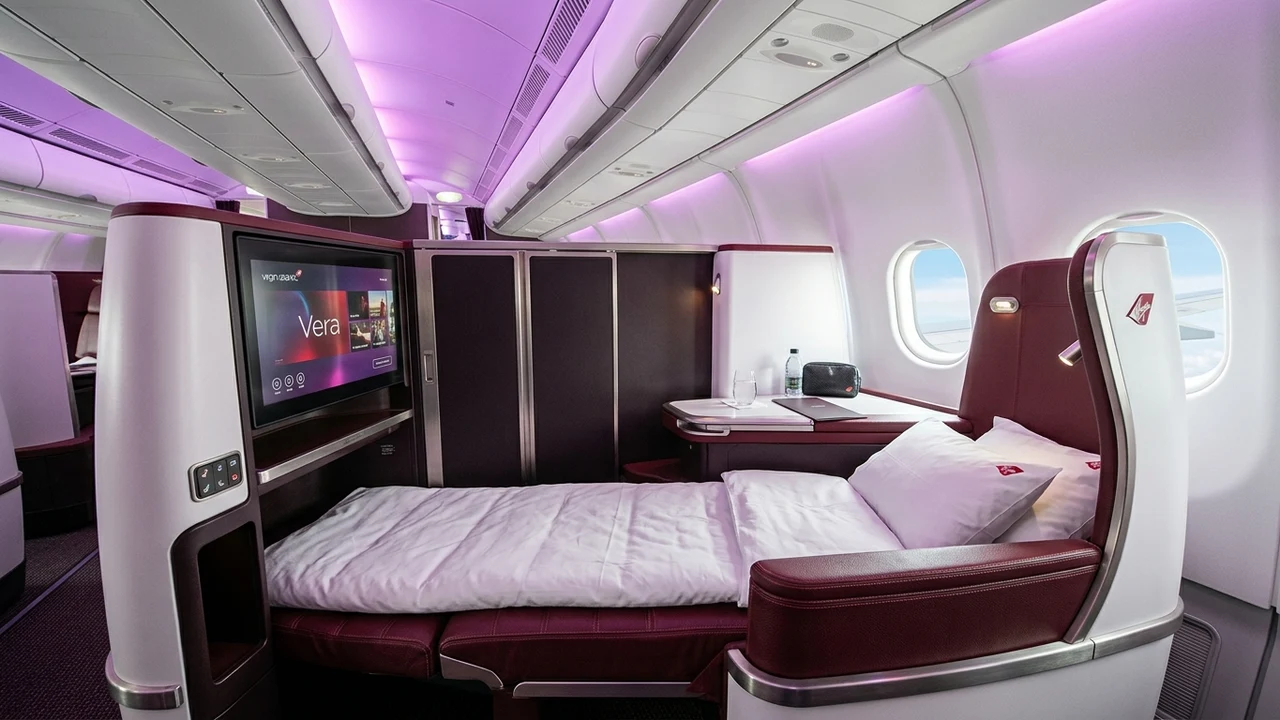
Virgin runs the A330neo on IAD–LHR, and it's carrying their latest Upper Class suite — the same one that debuted on their A350s, just on a slightly smaller jet. It's a herringbone-style seat with good privacy panels, mood lighting that doesn't feel gimmicky, and Virgin's typically strong food and wine list. I had a Malbec on a Virgin flight out of Dulles last year that was better than what I've been poured in some actual restaurants.
The tradeoff: fewer weekly frequencies than BA or United, so your date flexibility takes a hit. And Virgin's flight sometimes lands at Gatwick instead of Heathrow depending on schedule — worth double-checking before you build ground transport plans around it.
A note on aircraft swaps
Airlines swap equipment on this route more than people realize, especially in shoulder season when maintenance schedules shift things around. If the specific seat matters to you — and on an 8-hour flight, it should — confirm the aircraft type within a week or two of departure, not just at booking.
What does "Washington DC to London business class" actually cost right now?
Published fares for Washington DC to London business class on the nonstop carriers are sitting between $4,200 and $7,500 round-trip depending on season and how far out you're booking. That's the number you'll see if you go direct to ba.com, united.com, or virginatlantic.com and just buy the ticket.
Through consolidator fares — which is the whole business model at BestBusinessClass.com — the same cabins on the same flights typically run $1,700 to $2,900 round-trip. That's not a typo and it's not a bait-and-switch fare that disappears when you call. Consolidators buy bulk inventory from airlines at negotiated rates and pass the savings through, which is legal, common, and has been how a chunk of premium international travel gets sold for decades.
$4,200–$7,500
Published round-trip business class fare, IAD–LHR
Why is IAD specifically such good consolidator territory? Competition. Three airlines fighting over the same corridor, all of them needing to fill business class seats that would otherwise fly half-empty, creates exactly the kind of pricing pressure that works in a traveler's favor if you know where to look. Browse current deals and you'll see IAD show up more often than you'd expect for a mid-size gateway.
The government and contractor traveler problem
Here's something that makes DC different from basically every other US gateway city: an enormous share of the business traffic on this route isn't discretionary. It's federal employees, defense contractors, NGO staff, consultants on client engagements — people whose travel dates get set by someone else's calendar, not their own.
That matters because a huge amount of airline fare strategy assumes travelers can shift a day or two to catch a cheaper fare. DC travelers often can't. A meeting on the Hill or a client deliverable due Thursday doesn't move because Tuesday's fare is $400 cheaper.
This is exactly where a consolidator fare earns its keep. Because BestBusinessClass works across all three carriers and multiple fare buckets, they can usually find inventory close to your fixed dates rather than forcing you into the "flexible traveler" pricing tier that assumes you'll wait a week. If your dates are locked, that flexibility on the airline side matters more than almost anything else in this equation.
Pro Tip
If your travel dates are fixed by a client meeting, conference, or government schedule, call ahead rather than booking online. A consolidator can often find business class inventory on your exact dates that isn't showing up as a "deal" on public search engines.
What are the lounges actually like at Dulles?
This is where I'll happily contradict my earlier complaint about Dulles being dated, because the lounge situation on this specific route has gotten genuinely good.
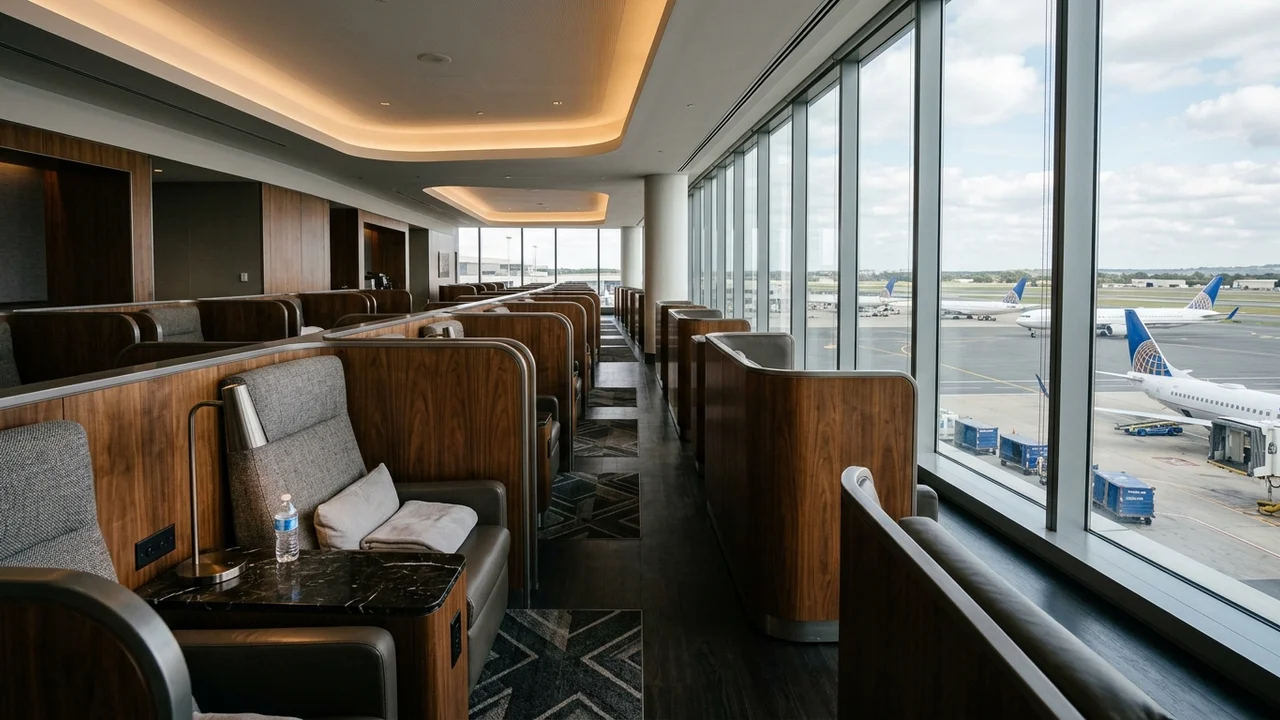
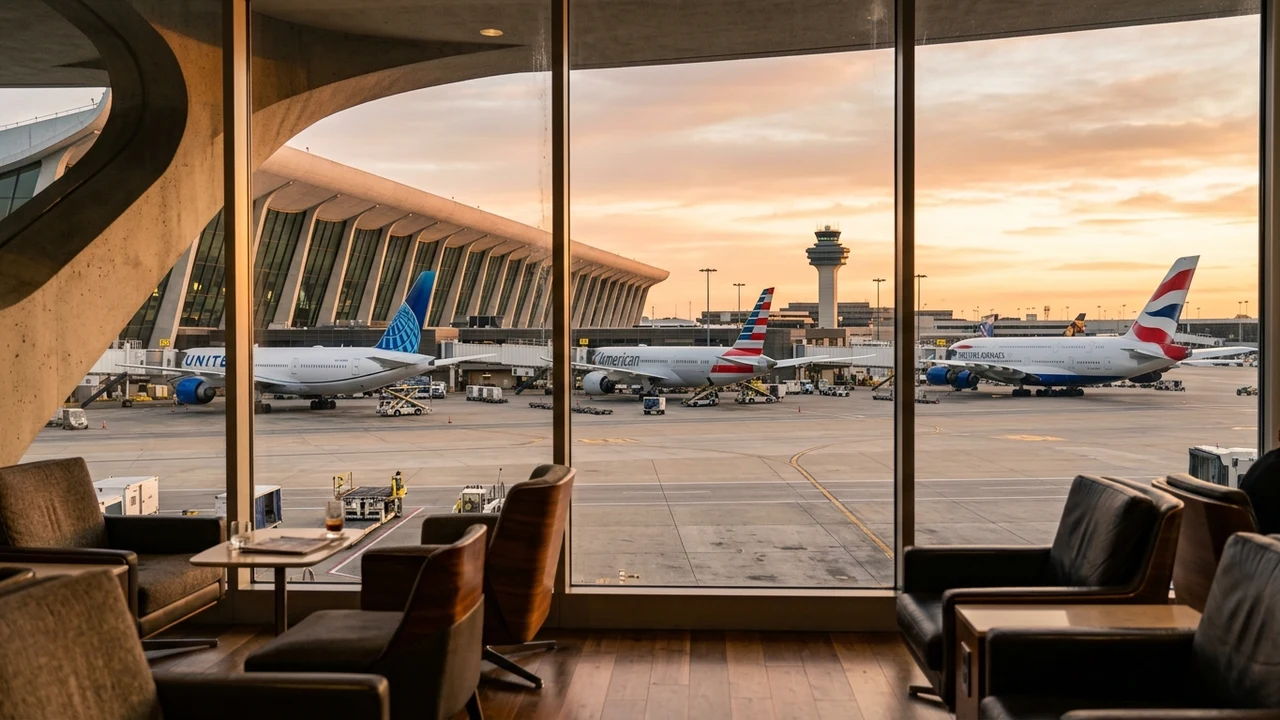
United Polaris Lounge, IAD — This is one of United's flagship Polaris Lounges, and it's not close to the mediocre Polaris lounges you'll find in some other cities. There's a proper sit-down dining room with a rotating menu (I had a solid braised short rib there last winter), a self-serve buffet that's a step above the usual cold cuts and hummus, and a quiet room with daybeds if you want to actually sleep before an overnight flight. It's consistently ranked among the best domestic lounges in the US, and for a pre-flight Polaris experience it earns that reputation.
British Airways Galleries Lounge, IAD — Smaller and less flashy than the Polaris Lounge, but functional. Decent bar, a passable hot food selection, and it does the job if you're not expecting a destination experience. It's fine. Not a reason to fly BA, not a reason to avoid it either.
Virgin Clubhouse — Virgin doesn't operate its own Clubhouse at Dulles (the Clubhouse experience is really an Heathrow and JFK thing), so you'll be using a partner lounge on departure. It's a noticeable step down from what Virgin offers on arrival in London, so temper your expectations heading out.
Lounge access tip
Even on a discounted consolidator business class ticket, you're entitled to the same lounge access as a full-fare passenger. The fare class code matters here — ask BestBusinessClass to confirm your ticket carries full lounge access before you fly, especially on partner or codeshare bookings.
Arriving in London: getting from Heathrow into the city
Heathrow's ground transport situation has actually improved a lot in the last few years, mostly thanks to the Elizabeth Line.
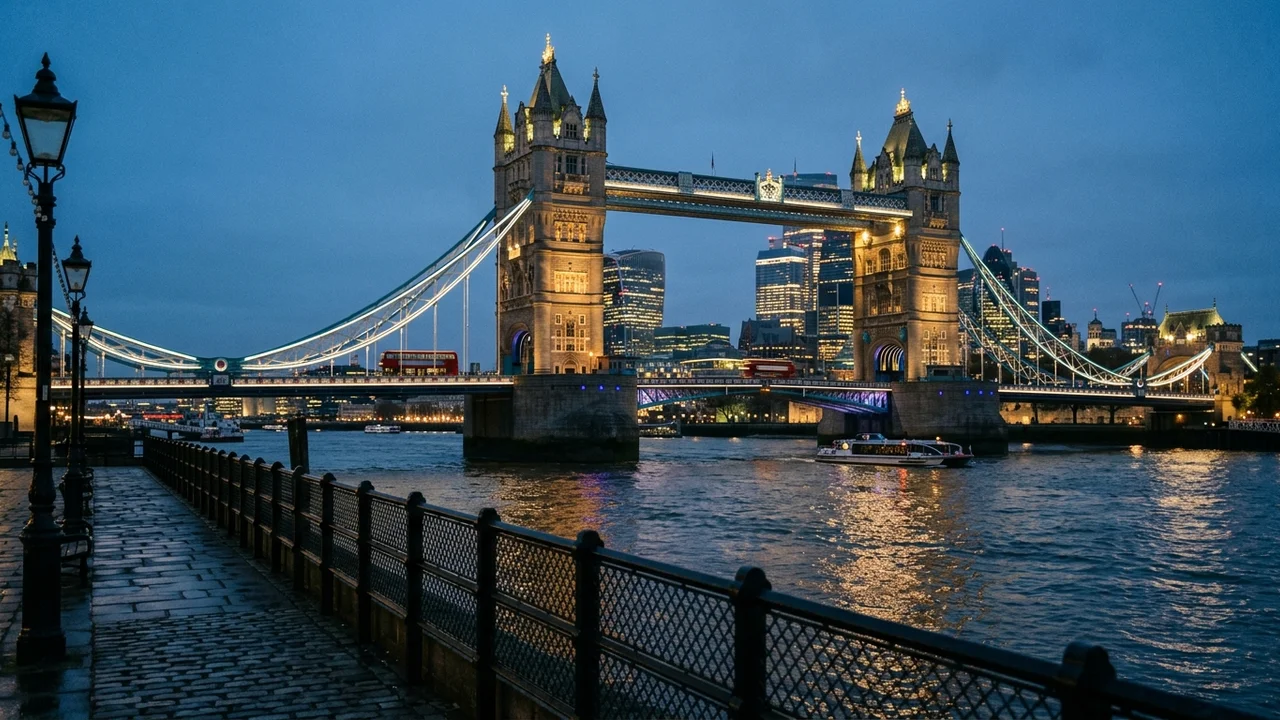
- Elizabeth Line — Runs directly from Heathrow Terminals 2/3 and Terminal 5 into central London, with a stop at Paddington and onward to places like Farringdon and Liverpool Street. It's about £13 and takes roughly 35–45 minutes depending on your final stop. Slower than the Heathrow Express but a fraction of the price, and honestly the trains are nicer.
- Heathrow Express — Nonstop to Paddington in 15 minutes, but it'll run you around £25–£40 one-way depending on when you book. Worth it if you're jet-lagged and just want to be done, not worth it if you're trying to save money.
- Black cab or Uber — Figure 45–75 minutes into central London depending on traffic, and £80–£100+ for a cab. I'd only do this with heavy luggage or a very early/late arrival when trains aren't running.
If you fly Virgin and end up at Gatwick instead, the Gatwick Express runs to Victoria in about 30 minutes for roughly £22.70 one-way — a perfectly good alternative, just a different endpoint in the city.
Which terminal do I land at, and does it matter?
Yes, more than people expect. BA lands at Terminal 5, which has the best Elizabeth Line access and BA's own arrivals lounge if you want a shower before a meeting. United lands at Terminal 2, which is newer and pleasant but has a slightly longer walk to the Elizabeth Line platform. Virgin, when it lands at Heathrow, also uses Terminal 3. None of these are dealbreakers, but if you've got a tight connection into a morning meeting, Terminal 5's layout is the smoothest.
BA via DCA, and why the Amtrak-to-JFK trick still works
Not everyone starts at Dulles. Reagan National (DCA) doesn't have nonstop widebody service to London — it's mostly regional jets and domestic routes — so if you're flying BA and starting from DCA, you're connecting, usually through JFK or another BA gateway, before crossing the Atlantic.
That connection adds time and a layer of risk (missed connections, extra security lines) that a nonstop from IAD simply avoids. If you live inside the Beltway near DCA, it's often faster overall to Uber or drive the 25–30 minutes out to Dulles than to fly DCA-JFK-LHR with a connection in between.
There's also a legitimate alternative worth mentioning: taking the Amtrak Acela up to New York and flying out of JFK or Newark instead. It sounds counterintuitive — why add a train ride to a flight — but it opens up more airline options, more daily frequencies, and sometimes better consolidator pricing than IAD, depending on the week. I cover this tradeoff in more depth in my JFK to London business class piece, but the short version is: JFK gives you more carriers (Delta, American, BA, Virgin all fly it, plus more frequencies) at the cost of a 3-hour train ride and the hassle of switching stations in Manhattan.
For most DC-based travelers, I don't think it's worth it unless the fare gap is dramatic — say, $600 or more round-trip — because the Acela plus the extra transfer time eats into any savings pretty fast. But if you're chasing a specific departure date and IAD inventory is tight, it's a real option, not a gimmick.
When should you actually book this route?
Fare patterns on IAD–LHR follow the broader transatlantic seasonal pattern pretty closely, with a couple of DC-specific quirks layered on top.

Late January through March is consistently the cheapest window. Post-holiday demand craters, government travel budgets are still ramping up for the fiscal year, and airlines discount business class inventory aggressively to fill seats. I've seen consolidator fares dip into the $1,700s in this window more than any other time of year.
October and November is the second sweet spot — after the summer travel surge and before the December holiday crunch, with the added bonus of decent weather in London if you're tacking on personal days.
Avoid, if you can: late June through August, when leisure demand from families and conference season overlaps and pushes both published and consolidator pricing up noticeably. Also watch late September, when UN General Assembly week in New York bleeds some pricing pressure into nearby East Coast routes.
Pro Tip
If your dates are flexible by even three or four days, shifting a Saturday departure to a Tuesday can save several hundred dollars on this route — even on already-discounted consolidator fares.
IAD vs JFK: which gateway actually wins?
I get asked this a lot by people who split time between DC and New York, so here's the honest breakdown:
- More airline choice: JFK, by a wide margin. Delta, American, BA, and Virgin all fly it, versus three carriers from IAD.
- Better average consolidator pricing: IAD, more often than not. Less overall demand means airlines and consolidators price more aggressively to fill seats.
- Better lounge on departure: Toss-up. United's Polaris Lounge at Dulles is arguably better than most JFK options, though JFK's Virgin Clubhouse is a legitimate destination in its own right.
- Convenience for DC-based travelers: IAD, obviously, unless you're already planning a NYC trip anyway.
If you want the full comparison and current pricing on both, the New York to London route guide is worth reading alongside this one, and the Washington DC to London route page has live consolidator fares specific to IAD.
Is Washington DC to London business class worth booking through a consolidator?
Given the fare gap — often $2,000 or more between published and consolidator pricing on the exact same seat — yes, almost every time. The mechanics are simple: BestBusinessClass.com works with consolidator networks that buy inventory from airlines at negotiated bulk rates, then sells it through directly rather than through public search engines, which is why you won't find these prices on Google Flights or the airline's own site.
The tradeoff is you generally need to call rather than book instantly online, and inventory can move fast on popular dates. But for a route where the published fare regularly clears $5,000 round-trip, a phone call that gets you into the same Club Suite or Polaris seat for under $2,500 is worth the five minutes.
If you're weighing this route against other options into Europe, my broader best business class to Europe roundup has more on where else this kind of consolidator pricing tends to show up, and the London city guide is a good next stop for what to do once you land.
For airline-specific details beyond what's here, the British Airways page, United page, and Virgin Atlantic page each break down seat maps and current fare ranges in more depth.
Call (855) 815-4774 for discounted Washington DC to London business class fares
Call NowI'll say this plainly: IAD doesn't get the credit it deserves as a transatlantic gateway. It's not glamorous, the AeroTrain is slow, and the food options pre-security are still stuck somewhere around 2009. But once you're through security and into either the Polaris Lounge or a Club Suite seat on that A350, none of that matters anymore. The flying is genuinely good on this route — it's just a matter of not paying the sticker price for it.
This article was created with AI assistance and reviewed by our editorial team.
#route-guide#transatlantic#london#washington-dc#iad#british-airways#united#virgin-atlantic
Enjoy our content? Make us a preferred source on Google.
Business class deals, delivered
Join savvy travelers who receive exclusive deals, route tips, and insider knowledge. Free, weekly, no spam.
Unsubscribe anytime. We respect your inbox.
By submitting, you agree to our Privacy Policy and Terms of Service.
Ready to book your business class flight?
Our specialists access unpublished fares and save you up to 40% on premium cabins.
Related Routes