Comparisons16 min readcomparisontranspacificbusiness-class
Best Business Class Seats for Transpacific Flights in 2026
From ANA's sofa-style suite to EVA Air's spotless Royal Laurel cabin, these five airlines set the standard for premium travel across the Pacific in 2026.
BC
BestBusinessClass Team
August 11, 2026
Share
Quick summary
The standard for flying across the Pacific has reached an incredible high point this year. Five carriers stand completely separated from the pack. ANA's The Room provides an unbeatably wide seat that mimics a living room sofa. Singapore Airlines delivers 81-inch flat beds on 19-hour hauls. Cathay Pacific returns with its Aria Suite, featuring massive 24-inch 4K screens. Japan Airlines traded dramatic design for thick mattress pads that actually promote deep sleep. EVA Air remains the quietest overachiever in the sky, running a spotless Royal Laurel cabin out of Taipei.
Flying across the Pacific Ocean is a physically demanding experience. You cross the international date line, skip entire days, and spend upwards of 14 hours locked inside a pressurized aluminum tube flying at 35,000 feet. Doing that in economy class is a test of endurance. Doing it in a truly exceptional business class cabin completely alters how you experience the journey.
A 14-hour flight changes your entire week depending on how you spend it. Sleep badly over the Pacific, and you lose two days to a brutal jet lag hangover upon arrival in Tokyo or Singapore. Sleep well, and you walk off a Boeing 777 ready for a 9:00 AM meeting in Shinjuku, completely refreshed.
Airlines know this. The arms race for the premium transpacific traveler has pushed the hard product — the actual physical seat — into territory that used to belong exclusively to first class cabins. We are living through a massive renaissance in premium cabin design right now. Sliding doors are standard. Direct aisle access is non-negotiable. Major carriers are ripping out old staggered configurations and installing massive, high-walled suites that offer unprecedented privacy.
But throwing money at a seat manufacturer does not automatically make an airline great. Service pacing, food quality, and cabin temperature matter just as much as the foam density of the seat cushion. The airlines that win do so because they obsess over the microscopic details. They control the cabin temperature so you do not wake up sweating in the middle of the night. They time the meal courses perfectly so you aren't sitting with an empty plate for twenty minutes while trying to go to sleep. They stock the lavatories with actual high-end amenities, cloth towels, and toothbrushes.
This year, five carriers stand completely separated from the pack. They operate out of different hubs, fly different aircraft, and subscribe to different design philosophies. But they share a total refusal to compromise on the passenger experience.
How we ranked these airlines
I evaluate these business class products based on three non-negotiable criteria.
First, the hard product. Does the seat offer direct aisle access for every single passenger? Does it convert to a truly flat bed that doesn't cramp your feet into a tiny cubby hole? Does it feature a privacy door or sufficiently high dividers to block out the rest of the cabin? I measure the actual width of the seat, the size of the inflight entertainment screen, and the usability of the storage compartments. A seat that looks good in press photos but fails in practical application gets heavily penalized.
Second, the soft product. This covers the catering program, the quality of the bedding, the amenity kits, and the inflight entertainment system interface. A fantastic seat paired with terrible, rubbery food fails the test. I look for airlines that invest in restaurant-quality dining, robust wine programs, and thick mattress pads that smooth over the bumps of an airplane seat.
Third, consistency. An airline that delivers an amazing experience on Tuesday but a terrible one on Wednesday cannot make this list. You pay thousands of dollars for a premium ticket; you deserve absolute reliability. An airline must deliver a top-tier product across their entire long-haul transpacific fleet, not just on a handful of flagship routes.
Here are the five airlines that survived that gauntlet in 2026.
1. All Nippon Airways — The Room
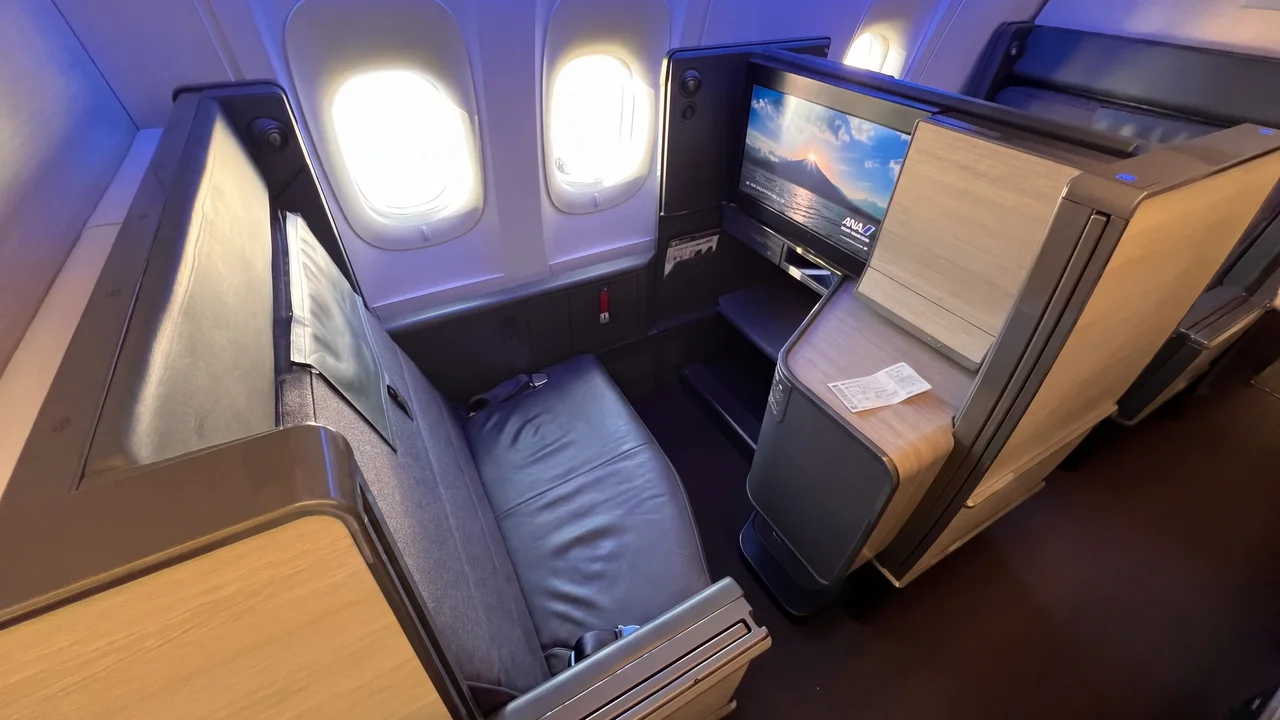
ANA's current flagship business class product fundamentally changes how you physically sit on an airplane. They call it The Room. The name is completely accurate and barely borders on hyperbole.
Instead of a narrow tube where your feet slide into a restrictive, coffin-like footwell, ANA built a space that looks like a small Manhattan studio apartment. The seat itself is aggressively wide. It measures an absurd 38 inches across at the shoulder. That is wider than some first class seats. It feels less like an airplane seat and more like a high-end living room sofa. The design team created a space where you can physically turn sideways and sit cross-legged while eating dinner or typing on a laptop. Try doing that on a United Polaris seat. You literally cannot.
ANA runs this spectacular product primarily on their Boeing 777-300ERs. You will consistently find it on flight NH109 from New York (JFK) to Tokyo Haneda (HND), as well as key routes out of San Francisco (SFO) and Chicago O'Hare (ORD). The flight out of JFK blocks in at 14 hours and 20 minutes westbound, giving you plenty of time to fully experience everything the cabin offers.
The physical walls rise high enough to block almost all sightlines to the rest of the cabin. When you slide the heavy privacy door shut, the semi-enclosed suite feels intensely private. You are completely isolated from the passenger sitting across the aisle. The 24-inch 4K monitor sits flush against the front wall, delivering a stunningly sharp picture for the inflight entertainment.
Pro Tip
When booking ANA out of New York, closely check the specific tail number on your flight. ANA still flies older 777 configurations on a few frequencies. You want the seat map showing a staggered forward and backward layout — that is the only way to guarantee you get The Room.
The Star Alliance carrier absolutely dominates service audits for a very specific reason. The Japanese concept of omotenashi — wholehearted hospitality — defines the cabin experience. They do not rush the meal service, yet they do not drag it out unnecessarily either. The flight attendants watch the cabin like hawks without hovering over you. They anticipate your needs.
The bedding features a Nishikawa customized mattress pad that smooths over the joints of the seat. The food represents the pinnacle of commercial airline catering. If you order the Japanese menu, you get precise, beautiful courses of sashimi, grilled fish, simmered vegetables, and perfectly steamed rice that easily rival mid-tier restaurants in Ginza. The sake selection is curated meticulously.
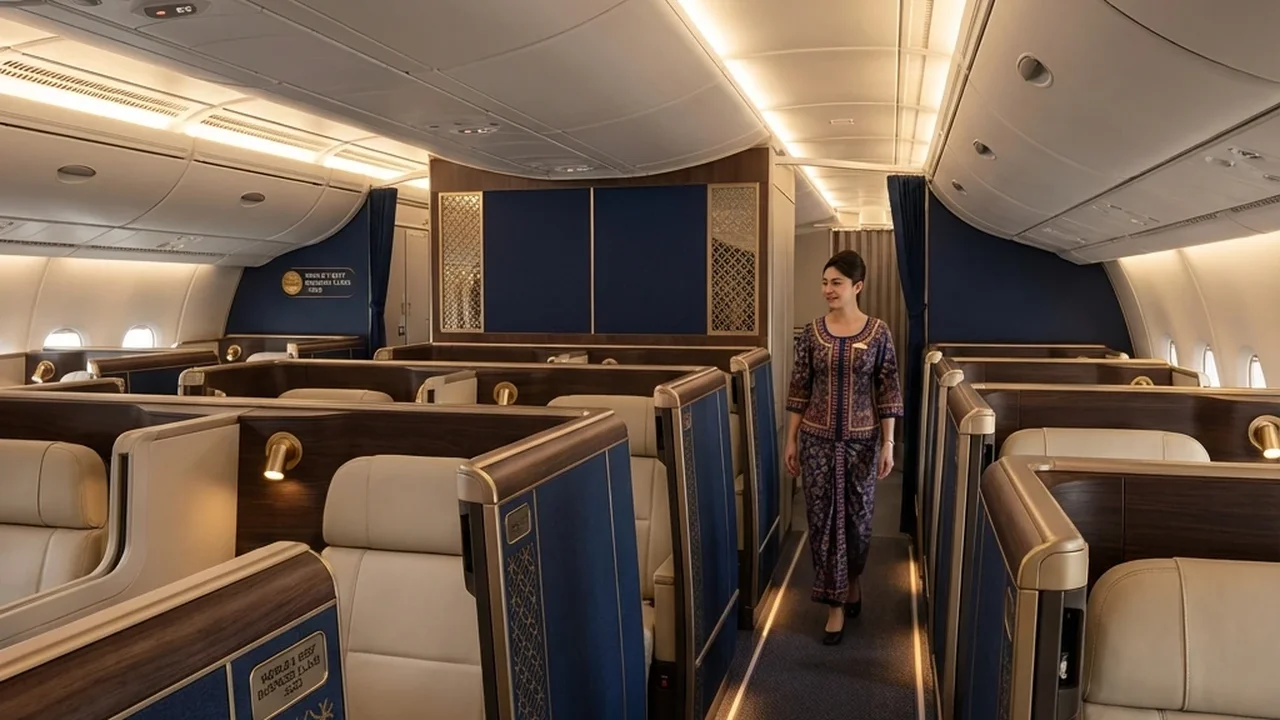
2. Singapore Airlines — Business class suite
Singapore Airlines approaches long-haul business class differently than anyone else in the sky. They focus on extreme endurance.Their Airbus A350-900ULR (Ultra Long Range) operates the absolute longest flights in the world. Flight SQ24 from Singapore (SIN) to New York (JFK) blocks in at 18 hours and 50 minutes. When you trap people in an aluminum tube for nearly 19 hours, the seat simply has to be flawless. Any minor annoyance magnifies exponentially over a flight of that duration.
The seat measures 30 inches across, providing massive amounts of shoulder room. It relies on a flip-over mechanism to convert into an 81-inch fully flat bed. This flip-over mechanism means you sleep on a dedicated, flat mattress surface rather than the same contoured cushion you sat on while eating dinner. It is a brilliant engineering decision that completely eliminates the lumpy feeling you get on most business class beds. You get a real bed.
81 inches
Length of the fully flat bed in Singapore Airlines' A350 business class
Full-height privacy doors enclose the space securely. The storage compartments actually fit modern electronics, swallowing laptops, tablets, and headphones with room to spare. The controls for lighting and seat position make immediate sense without requiring you to study a manual. The large workspace easily handles a 16-inch MacBook Pro, a coffee cup, and a notebook simultaneously without feeling cramped.
Beyond the grueling JFK route, they run nonstop flights to Newark (EWR), Los Angeles (LAX), and Seattle (SEA). They also push up to six flights a day into London Heathrow (LHR), maintaining extreme consistency across their network. If you book a long-haul flight on Singapore Airlines, you know exactly what level of quality you will receive.
The cabin crew anticipates what you want long before you ask for it. They notice you staring at the bottom of your water glass, and a fresh one appears silently. They see you pull out a laptop and immediately ask if you want the overhead reading light adjusted. They are present but entirely out of sight when you want to sleep. Their training program is legendary for a reason.
The Book the Cook dining program remains the strongest food offering in commercial aviation. You log in 48 hours before departure and select from dozens of off-menu options. Order the classic lobster thermidor. It arrives hot, perfectly sauced, and surprisingly tender. The satay appetizer they serve before the main meal is a signature touch that never gets old.
3. Cathay Pacific — Aria Suite
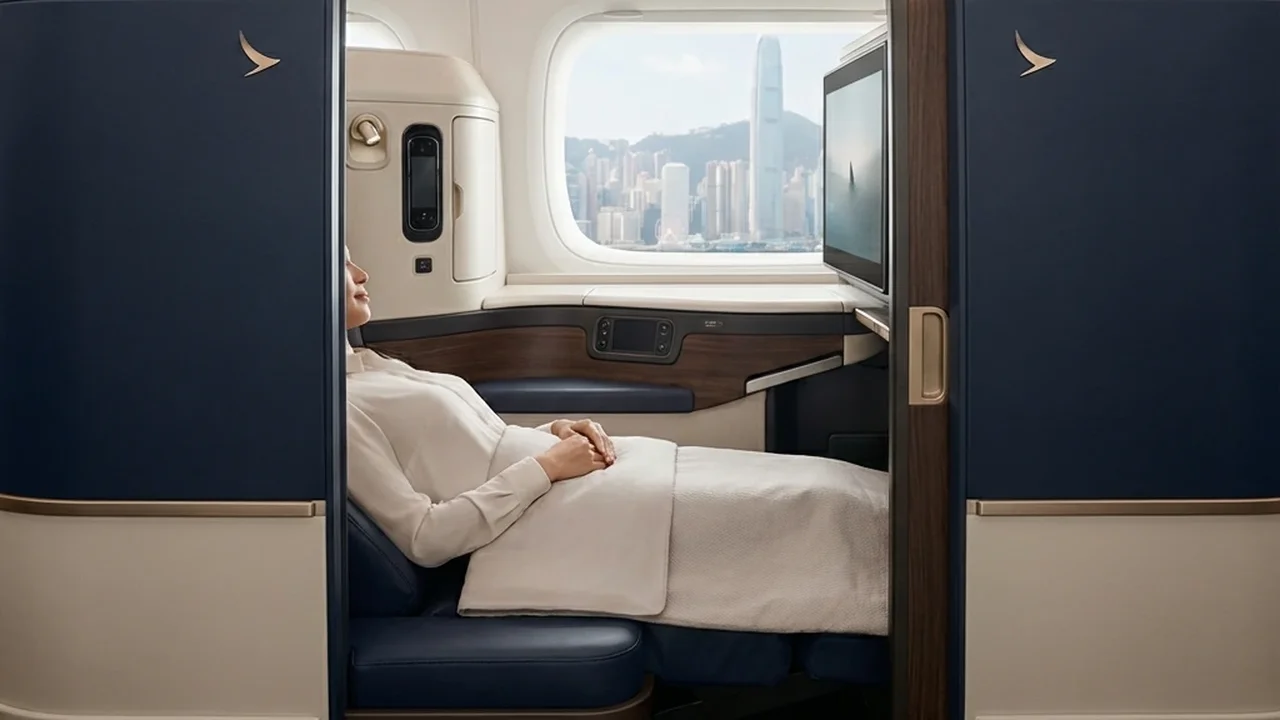
Cathay Pacific roared back into the premium travel conversation with the debut of the Aria Suite.
The Hong Kong-based Oneworld carrier faced intense, legitimate criticism for falling behind Middle Eastern and Japanese competitors over the last decade. Their old reverse herringbone seats were fine, but they lacked doors and felt slightly dated. The Aria Suite fixes absolutely everything and catapults Cathay straight back to the top tier.
The fully enclosed design features a heavy sliding privacy door that operates smoothly and locks firmly into place. The aesthetic leans heavily into understated, sophisticated luxury — clean architectural lines, muted wood tones, and high-quality, textured fabrics that feel expensive to the touch. They skipped the gaudy gold trim favored by some airlines and went for a highly refined, modern look.
The inflight entertainment screen absolutely demands your attention. It is a staggering 24-inch 4K monitor. That is massive for business class, rivaling many first-class setups. They paired it with seamless Bluetooth audio connectivity, meaning you can finally use your AirPods Pro or Sony headphones without messing with annoying dongles or the terrible, static-filled airline-provided headsets. The wireless charging pad built directly into the side console actually works reliably and holds the phone securely during moderate turbulence.
Cathay heavily revamped their dining program alongside the new seat. The meals taste remarkably fresh and vibrant. They partner with high-end Hong Kong restaurants to design the menus, resulting in fantastic dim sum breakfasts and rich, complex curry dishes for dinner. The wine list punches well above its weight class, featuring excellent French Bordeaux and crisp New Zealand Sauvignons.
Connecting through their Hong Kong (HKG) hub remains one of the absolute best transit experiences globally. The flagship lounges, particularly The Pier and The Wing, feature full, made-to-order noodle bars, extensive tea selections, and excellent, hotel-quality shower suites that reset you between long flights.
4. Japan Airlines — Sky Suite
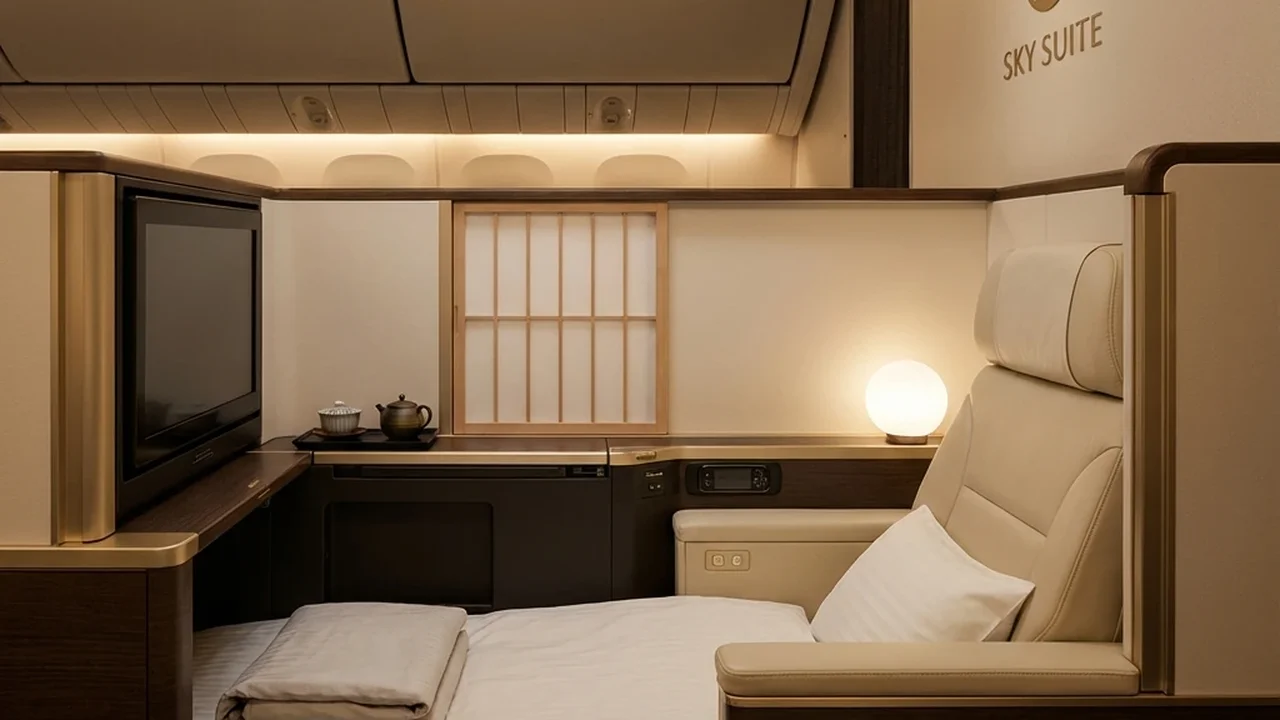
Japan Airlines (JAL) refuses to build overly flashy cabins. They build cabins that let you sleep deeply and comfortably.
The Sky Suite ignores the current trend of hyper-designed, enclosed pod living in favor of supreme physical comfort. The dividers go high enough to give you complete visual privacy from your neighbor, but the top of the cabin remains completely open. This specific design choice prevents the tight, claustrophobic feeling that plagues some of the heavily enclosed suites on other airlines. You get privacy without feeling like you are trapped in a box.
JAL absolutely wins on the bedding. They supply a spectacularly thick airweave mattress pad that provides genuine support for your back. They pair it with a heavy, high-quality duvet that regulates temperature perfectly. The seat itself in the Sky Suite configuration measures 25.5 inches wide and converts to a 74-inch bed. It is spacious and ergonomically sound.
If you take flight JL5 from JFK to Tokyo Haneda — a flight departing in the early afternoon and arriving the next afternoon in Japan — you desperately need to sleep for at least six hours over the Pacific to survive the brutal time change. JAL's setup makes that easy. The cabin is kept at a comfortable, cool temperature, unlike some airlines that blast the heat during overnight flights.
Pro Tip
Search New York to Tokyo business class fares on JAL specifically for their Airbus A350-1000 aircraft. The hard product on this specific plane is vastly superior to their older Boeing 777s, featuring a brand new, highly advanced suite design.
The hospitality matches ANA entirely, though it feels slightly more relaxed and personable. The menus lean heavily into traditional Japanese cuisine, offering a multi-course kaiseki-style meal that is visually stunning. But JAL puts serious money into their Western options as well. Their wagyu beef dishes consistently arrive cooked exactly to temperature, which is a near-impossible culinary feat at 35,000 feet. The lounge at Haneda airport offers incredible sushi and a highly automated beer dispenser that perfectly pours a glass of Kirin.
5. EVA Air — Royal Laurel
EVA Air operates in the shadows of heavyweights like Singapore Airlines and ANA. Frequent flyers love this specific dynamic because it keeps the awards availability open and the cash prices surprisingly reasonable for the quality provided.
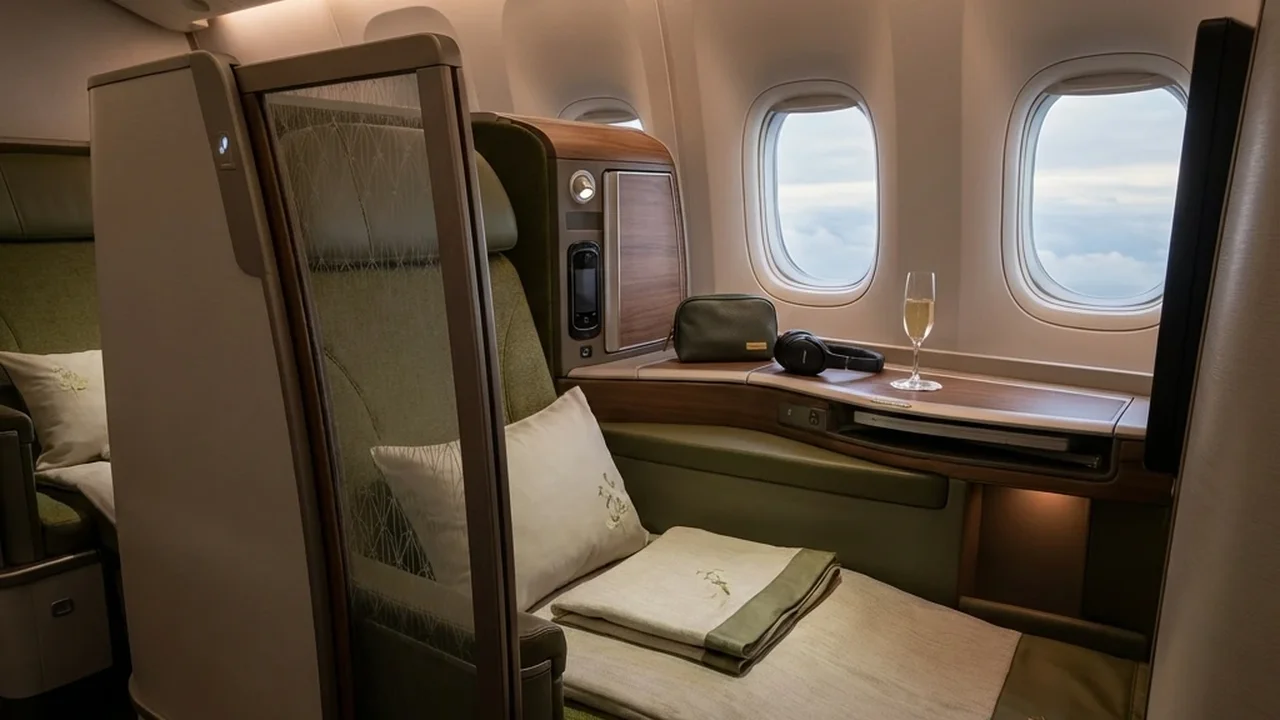
The Taiwanese carrier's Royal Laurel class is incredibly, flawlessly consistent. The 1-2-1 reverse herringbone configuration gives every single passenger direct aisle access. The seats are 26 inches wide and fold into perfectly flat 78-inch beds. While they lack the massive sliding doors of ANA or Cathay, the physical shell of the seat curves aggressively inward, providing excellent privacy for sleeping.
EVA Air obsesses over cabin cleanliness to a degree that borders on fanaticism. You will never find a stray crumb in the seat track or a smudge on the window shade. The flight attendants clean the lavatories after almost every single use, wiping down the counters and restocking the amenities constantly. It feels like you are the first person to ever fly on the aircraft.
Operating heavily out of Taipei Taoyuan International Airport (TPE), this Star Alliance member flies high-frequency routes into Los Angeles (LAX), San Francisco (SFO), Seattle (SEA), and Houston (IAH). They offer incredibly fast, efficient connections to Bangkok, Ho Chi Minh City, and Manila.
The catering ranks right at the absolute top of the industry. They serve vintage Champagne, pouring generous glasses before departure and keeping them full throughout the flight. They plate the food carefully on beautiful porcelain. They offer phenomenal Din Tai Fung dim sum on select routes out of Taipei, bringing world-class restaurant food onto the airplane. You get premium, highly comfortable pajamas and high-end, hard-shell amenity kits on every single long-haul flight. They absolutely do not cut corners on the soft product.
Booking tips for transpacific business class
Securing one of these highly coveted seats requires strategy. If you walk up to an airline website and try to book a round-trip ticket from Los Angeles to Tokyo two weeks before departure, you will face prices ranging from $6,000 to $10,000. That is the corporate rate, designed for businesses that do not care about the cost. You do not have to pay that.
The first rule of booking premium transpacific travel is flexibility. Shifting your departure date by a single day can drop the price by thousands of dollars. Mid-week departures — specifically Tuesdays and Wednesdays — consistently price out significantly cheaper than weekend flights. Airlines price their cabins based on heavy demand from business travelers departing on Sundays and Mondays. Avoid those days if possible.
You should aggressively target shoulder seasons. Late September through November, and late January through early March, represent massive sweet spots for pricing. The weather in destinations like Japan and Taiwan remains excellent during these windows, but the heavy tourist demand drops off a cliff. During these specific periods, consolidator fares often drop below $3,000 round-trip for true lie-flat business class.
Pro Tip
Always consider booking an open-jaw ticket. Flying into Tokyo and flying out of Osaka or Seoul saves you the hassle of backtracking to your arrival city. Consolidator networks price these multi-city itineraries highly competitively, often matching the price of a standard round-trip ticket.
Finally, heavily consider positioning flights. If you live in a smaller market like Denver or Austin, flying directly to Asia often forces you onto overpriced, poorly routed itineraries. Instead, book a cheap, separate domestic flight to a massive international gateway like Los Angeles (LAX) or New York (JFK). Flying out of those ultra-competitive hubs gives you access to the best products (like ANA's The Room or Cathay's Aria Suite) and drastically lower prices. Just leave yourself at least four hours between the domestic arrival and the international departure to protect against delays.
The final verdict
The Pacific Ocean is too massive to cross in an uncomfortable seat. Upgrading to a premium cabin transforms the entire experience from a grueling endurance test into a luxurious, highly anticipated part of the vacation. The five airlines listed above have mastered the art of long-haul travel.
ANA delivers an unparalleled spatial footprint with The Room. Singapore Airlines executes perfectly on the soft product and extreme endurance comfort. Cathay Pacific provides the best technology and transit experience. Japan Airlines guarantees the best night of sleep you can get in the sky. EVA Air quietly delivers flawless consistency and incredible catering without the massive price premium.
Pick the carrier that aligns with your specific priorities, hunt for a smart fare, and enjoy the flight. It is worth the effort.
Looking for business class fares across the Pacific? BestBusinessClass.com finds consolidator rates up to 40% below published prices.
Call (855) 815-4774This article was created with AI assistance and reviewed by our editorial team.
#comparison#transpacific#business-class#ranking#best-of#2026
Enjoy our content? Make us a preferred source on Google.
Business class deals, delivered
Join savvy travelers who receive exclusive deals, route tips, and insider knowledge. Free, weekly, no spam.
Unsubscribe anytime. We respect your inbox.
By submitting, you agree to our Privacy Policy and Terms of Service.
Ready to book your business class flight?
Our specialists access unpublished fares and save you up to 40% on premium cabins.