Travel Tips11 min readsavingstrendspricing
Business Class Price Trends 2026: Where Fares Are Heading & How to Stay Ahead
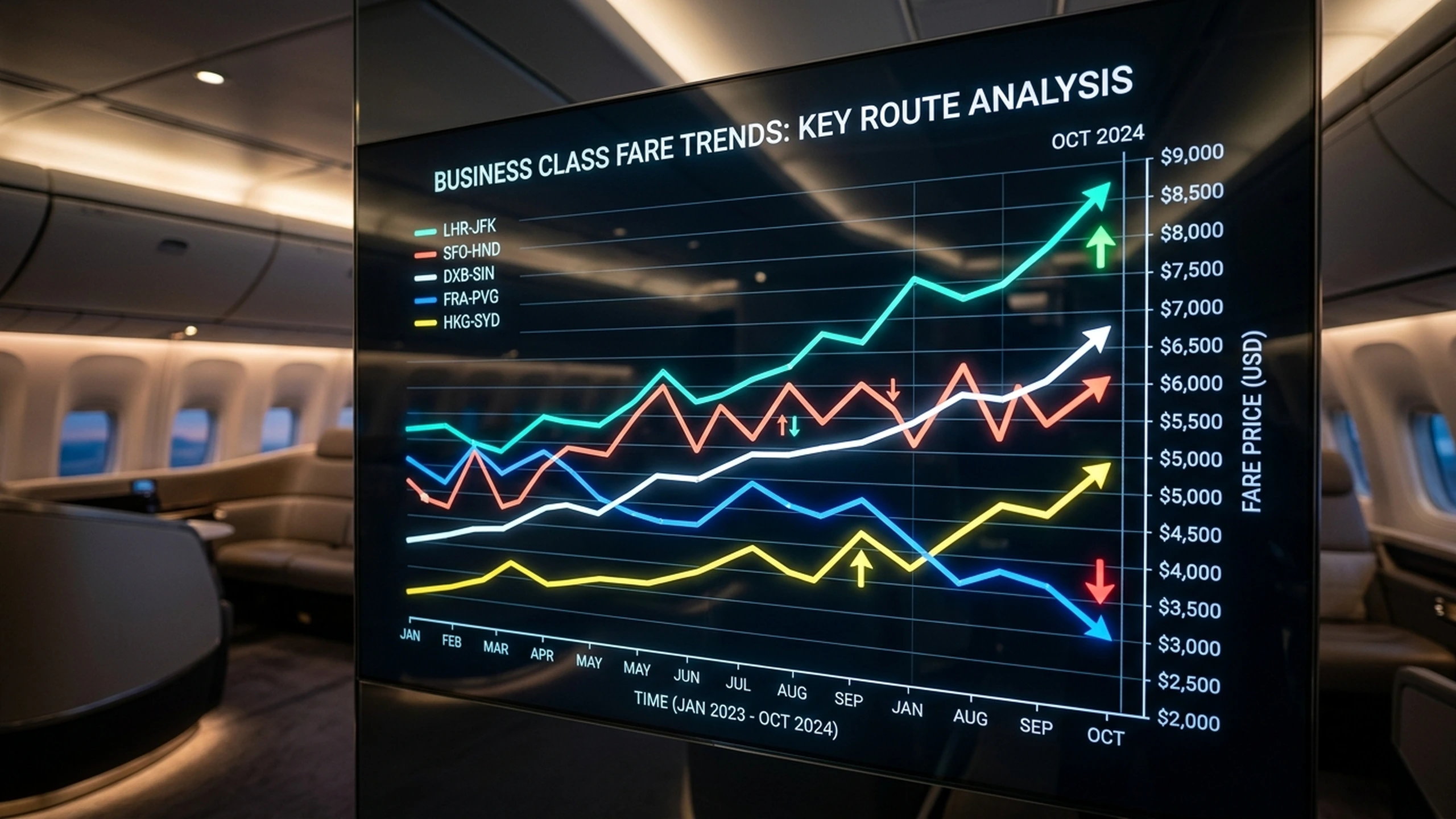
Business class fares in 2026 are tracking up roughly 2-3% over 2025 overall, but the picture varies wildly by region — transatlantic is softening, transpacific is climbing, and South America is…
BC
BestBusinessClass Team
September 18, 2026
Share
Quick summary
Business class fares in 2026 are tracking up roughly 2-3% over 2025 overall, but the picture varies wildly by region — transatlantic is softening, transpacific is climbing, and South America is quietly becoming a bargain. Consolidator rates like those available through BestBusinessClass tend to lag published fare spikes by 2-4 weeks, which means timing and sourcing matter more than ever this year.
Business class price trends 2026: the big picture
Here's the honest version of what's happening to premium cabin fares right now.

Airlines came out of the pandemic with a theory: business travelers and aspirational leisure flyers would pay almost anything for a flat bed and a decent Champagne. And for a while, they were right. Premium cabin load factors on major transatlantic routes have been running above 85% consistently, which gave carriers the confidence to hold rates high and add ancillary fees with a straight face.
But 2026 is more complicated. Capacity is returning. Airbus and Boeing are finally delivering widebodies — slowly, painfully, behind schedule, but delivering. That changes the math. More seats means more competition, and on certain routes, you're already seeing it in the fares.
+2-3%
Projected overall business class fare increase in 2026 vs. 2025
The short version: 2026 business class price trends aren't a single story. They're five or six different stories depending on where you're flying. Getting this wrong means either overpaying significantly or missing a buying window that won't come back.
Transatlantic fares: finally some relief
The North Atlantic has been a pricing pressure cooker since 2022. That's starting to ease.

The biggest factor is the A321XLR. JetBlue has been running Mint across the Atlantic for a few years now, but the XLR opens up thinner routes that previously only made sense for widebody metal. Aer Lingus is expanding aggressively with it too. Neither carrier charges Qatar Airways prices, and their presence on routes like Boston–Dublin or JFK–Edinburgh puts real downward pressure on what British Airways and United can charge.
I've been tracking transatlantic business class fares on BestBusinessClass for the past several months, and we're seeing round-trip published fares from New York to London settle in the $2,200–$3,400 range depending on carrier and timing, down from peaks closer to $4,000+ in 2023.
New York (JFK)London (LHR)
British Airways · Business Class
$2,200
roundtrip
View route
Pro Tip
Q1 — January through mid-March — is consistently the cheapest window for transatlantic business class. Post-holiday, pre-spring-break, and airlines are filling seats. Book Q1 2026 travel now if you haven't.
That said, don't expect transatlantic to become cheap. Load factors are still high, fuel surcharges are baked in, and the legacy carriers have gotten very good at yield management. What you're seeing is a modest correction, not a collapse.
Does the A321XLR actually change the competitive picture?
Yes, meaningfully — but with caveats. The XLR's range is roughly 4,700 nautical miles, which opens up thin transatlantic routes that couldn't support a 777 or A350. That creates new competition on secondary markets. But on core routes like JFK–LHR or EWR–CDG, the heavyweights aren't budging much. The real beneficiaries are travelers flying to/from secondary U.S. cities or smaller European destinations.
JetBlue Mint is genuinely excellent for the price — I flew it BOS–LGW last spring and the flatbed, the Tuft & Needle mattress topper, and the food quality all punched well above what the fare suggested. But the schedule is thin and the network is limited. It's a great option when it works.
Transpacific: the route where fares are actually rising
If transatlantic is softening, transpacific is moving the other direction.
Japan and South Korea tourism has been extraordinary since both countries fully reopened. The won and yen have stayed relatively weak against the dollar, which makes those destinations attractive to American travelers — but it also means inbound demand from those markets to the U.S. is suppressed. Net effect: flights are full of Americans heading west, and airlines know it.
+5-8%
Expected transpacific business class fare increase in 2026
Capacity is the other issue. Boeing 787 delivery delays have genuinely constrained transpacific expansion. Several carriers that wanted to add routes or increase frequency simply don't have the aircraft. United has been particularly vocal about this. ANA and JAL are in similar positions. The result is a market where demand is strong and supply is tight, which is textbook pricing pressure.
Los Angeles (LAX)Tokyo (HND)
ANA · Business Class
$4,800
roundtrip
View route
Q2 — roughly April through early June — tends to be the sweet spot for transpacific. You catch the window before summer peak, and cherry blossom season demand has usually cleared. If you're planning a Japan or Korea trip for 2026, that's when I'd target.
Don't wait on transpacific
Fares on LAX–NRT and LAX–ICN routes have been booking out 6-8 months in advance in business class. Waiting for a last-minute deal on these routes almost never works. Book early or use a consolidator with contracted inventory.
Middle East routes: aggressive competition keeping fares in check
Emirates and Qatar are in a perpetual pricing war, and travelers are the beneficiaries.
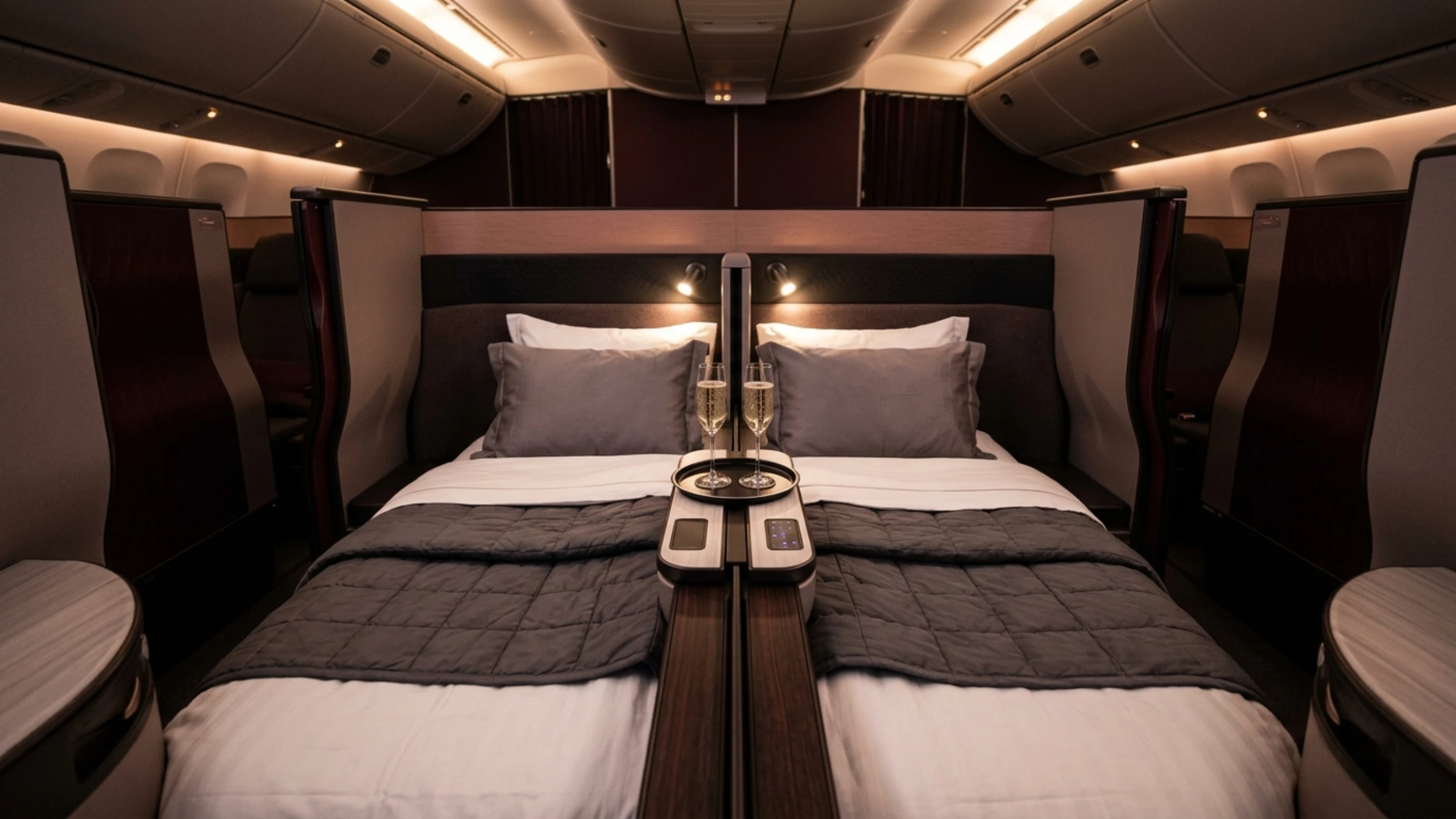
Both carriers have been expanding their U.S. gateway operations and neither one is shy about undercutting to fill their flagship products. Qatar's QSuites remain arguably the best business class product in the sky — I've flown it JFK–DOH–BKK and the privacy, the bed, the food, all of it is genuinely exceptional — but the airline prices aggressively to keep those seats filled.
The Middle East routing (U.S. to Southeast Asia or India via Doha or Dubai) often ends up cheaper than a direct transpacific fare even with the longer flight time. Worth doing the math.
$2,800
Typical round-trip NYC–Dubai business class via Emirates
Fares on these routes are expected to stay largely stable through 2026. Neither Emirates nor Qatar has the incentive to raise prices significantly when they're both competing for the same connecting traffic. That competition is your friend.
South America: a quietly improving market
This one doesn't get enough attention.

LATAM has been rebuilding aggressively post-bankruptcy, and Azul is adding international capacity from secondary Brazilian cities. More seats on routes like GRU–JFK or GIG–MIA means fares are coming down — we're tracking a 3-5% decline in 2026 business class pricing compared to 2025 on major South American routes.
Miami (MIA)São Paulo (GRU)
LATAM · Business Class
$3,100
roundtrip
View route
The product quality on LATAM's international business class has improved considerably. It's not Qatar, but it's a solid flatbed with decent food and a functional IFE system. For the price, it's increasingly hard to argue with.
Pro Tip
GRU–JFK or EZE–JFK fares tend to dip sharply in Q4 — October through November — as summer in the Southern Hemisphere hasn't started yet and North American holiday travel hasn't peaked. That's your buying window.
How the quarterly fare calendar actually works in 2026
Most travel content talks about "best times to book" in vague terms. Here's what the data actually shows for 2026 business class price trends, broken down by quarter:
Q1 (January–March): Cheapest for transatlantic. Post-holiday slump, weak corporate travel demand in January, and airlines discounting to fill premium cabins. This is when you buy transatlantic if you can travel between now and April. Q2 (April–early June): Best window for transpacific. Cherry blossom season has cleared, summer hasn't started, and fares haven't hit peak yet. Good window for Middle East routings as well before summer heat peaks. Q3 (July–September): Peak pricing across almost everything. Load factors hit their annual highs. Business class fares on major routes can run 40-60% above Q1 prices. If you're flying Q3, you either booked early or you're paying a premium. Q4 (October–November): Shoulder season deals re-emerge. Transatlantic gets interesting again. South America pricing softens. The weeks between Thanksgiving and Christmas are a gap that savvy travelers exploit regularly.The Q4 window most people miss
The first two weeks of November are often the single best value window of the year for transatlantic and South American business class. Corporate travel hasn't peaked for year-end yet, and leisure demand is still building toward the holidays. BestBusinessClass advisors specifically flag this window when clients are flexible on timing.
How do consolidator rates track against published fares?
This is the part most travelers don't know, and it matters more in a volatile pricing environment.
Published business class fares — the ones you see on Google Flights or the airline's own website — react quickly to demand signals. A route fills up, the fare buckets close, the displayed price jumps. It can happen within hours.
Consolidator rates move differently. The contracted rates that BestBusinessClass works with are typically negotiated in advance and held for a defined period. When published fares spike, consolidator pricing often hasn't caught up yet — there's a lag of roughly 2-4 weeks. That gap is where the savings live.
2-4 weeks
Typical lag between published fare spikes and consolidator rate adjustments
It also works in reverse, which is the part consolidators don't always advertise. When published fares drop sharply — say, an airline floods the market with a flash sale — consolidator rates may still reflect the prior higher level for a short window. The net effect over time still heavily favors the consolidator channel, but it's worth understanding how it works.
The other advantage of working with a service like BestBusinessClass is the locked-in contracted inventory. When transpacific fares are climbing 5-8% because of Boeing delivery delays and surging Japan demand, clients who've booked through contracted consolidator rates are partially insulated from that spike. The fare they were quoted weeks ago is still the fare they pay.
What fuel prices are doing to surcharges
Fuel surcharges — officially called "carrier-imposed surcharges" or YQ fees — are the quiet fare component that most travelers ignore until they try to book with miles or points.
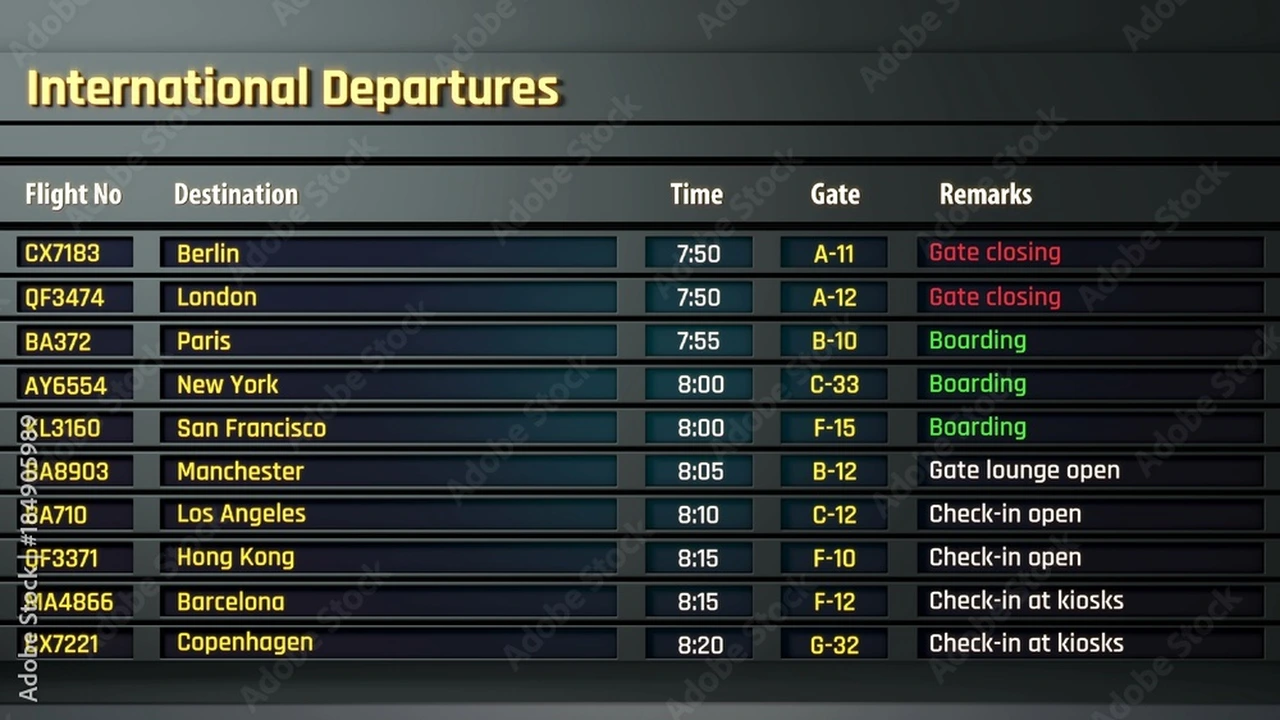
Jet fuel prices have moderated from their 2022 highs but remain above pre-pandemic levels. Most major carriers have embedded their current fuel cost assumptions into published fares rather than making surcharges a separate line item (the way they used to), but the cost is still there.
The practical impact on 2026 business class price trends: expect base fares to creep up slightly on long-haul routes as airlines hedge their fuel exposure into pricing. Transatlantic carriers in particular have been adjusting fuel surcharges quietly in their published fare structures. It's not dramatic, but it's real.
Points travelers, pay attention
If you're booking business class with airline miles, YQ surcharges are where you can get hit hard. British Airways Avios redemptions to/from the U.S., for example, carry substantial fuel surcharges even on award tickets — sometimes $700+ round-trip. Emirates and Air France are similar. This is part of why cash consolidator fares through BestBusinessClass sometimes beat "free" award tickets on a total cost basis.
How BestBusinessClass navigates all of this
I'll be direct about what BestBusinessClass actually does, because it's worth explaining clearly.
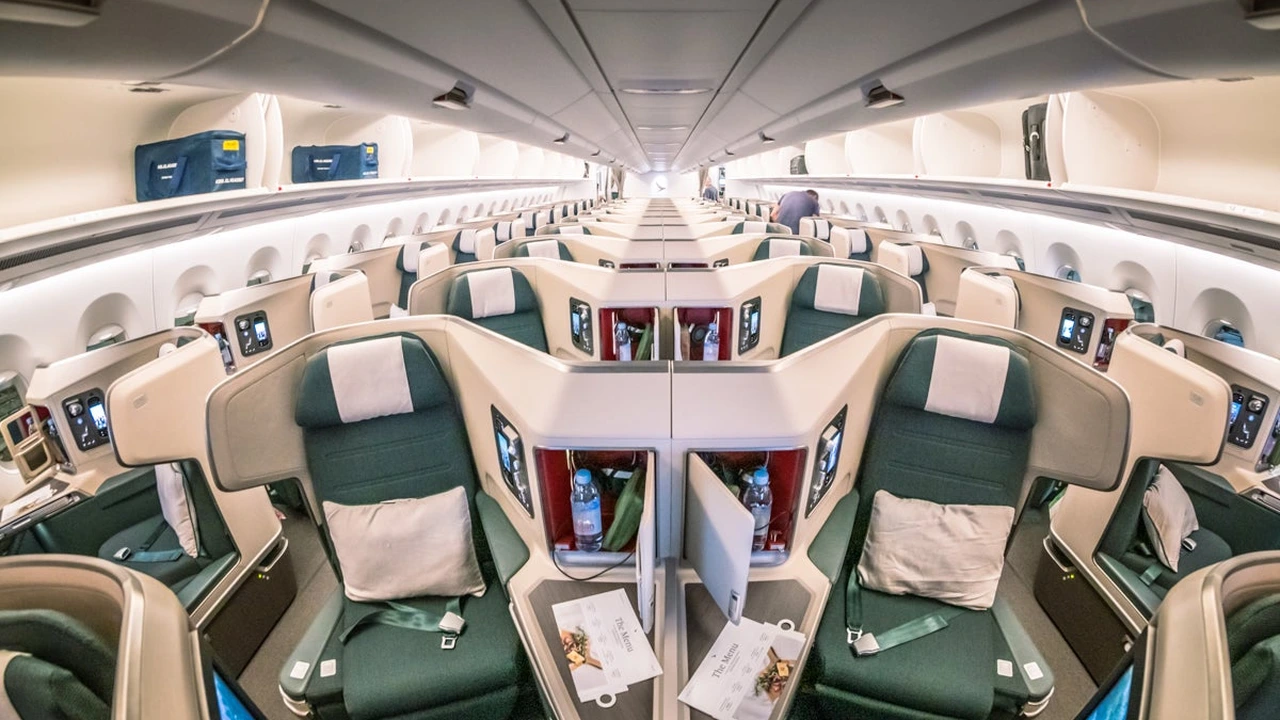
It's a concierge-style consolidator service. The advisors have access to contracted business class fares from airlines that aren't available through public booking channels. When you call (855) 815-4774, you're talking to someone who actually knows the difference between a Qatar QSuite and a standard Qsuite configuration, who understands that the middle seats on certain A380 configurations convert to doubles, and who can route you through Doha instead of London to save $800 and add three hours to your flight — or not, depending on what you actually want.
The consolidator model works because airlines would rather sell seats at a slightly lower contracted rate than fly them empty. The margins are thinner for the airline, but a full premium cabin is better than an empty one. That math benefits travelers who know where to look.
You can browse current deals on the site, but the real value is in calling and having a conversation about your specific route and dates. The transatlantic route page has current fare ranges, and the Qatar Airways page breaks down what to expect from the product specifically.
For context on how consolidator savings compare across carriers, the best business class airlines breakdown is worth reading alongside this one.
20-40%
Typical savings vs. published fares through consolidator channels
The prediction for 2026 is that the savings percentage through consolidators actually widens even as overall fares tick up. When published fares rise and consolidator contracted rates hold, the gap grows in your favor. That's been the pattern in previous rising-fare cycles, and the current market dynamics suggest 2026 will follow suit.
What to actually do right now
Stop watching fares and start booking.
If you're targeting a transatlantic trip in Q1 or early Q2 2026, you're in the best buying window of the year. Fares are soft, competition from JetBlue and Aer Lingus is keeping legacy carriers honest, and consolidator rates are favorable.
If transpacific is on your list — Japan, Korea, Southeast Asia — don't wait. The 5-8% fare increase projection for 2026 isn't a future event, it's already happening on some routes. Booking through a consolidator with contracted inventory is your best hedge against further increases.
And if you're flexible on timing, tell the advisor that. Flexibility is the single most powerful tool you have in a volatile fare environment. A week's difference in departure date can mean $600 or more on a round-trip business class ticket.
Call (855) 815-4774 to lock in 2026 business class fares before published prices climb further
Call NowThis article was created with AI assistance and reviewed by our editorial team.
#savings#trends#pricing#forecast#2026#market-analysis
Enjoy our content? Make us a preferred source on Google.
Business class deals, delivered
Join savvy travelers who receive exclusive deals, route tips, and insider knowledge. Free, weekly, no spam.
Unsubscribe anytime. We respect your inbox.
By submitting, you agree to our Privacy Policy and Terms of Service.
Ready to book your business class flight?
Our specialists access unpublished fares and save you up to 40% on premium cabins.