Guides11 min readconsolidator-farebooking-strategysavings
What Is a Consolidator Fare? The Industry Secret That Saves You 40% on Business Class
A consolidator fare is a discounted business class ticket that airlines sell in bulk to wholesale travel agencies, who then resell them below published rates.
BC
BestBusinessClass Team
June 8, 2026
Share
Quick summary
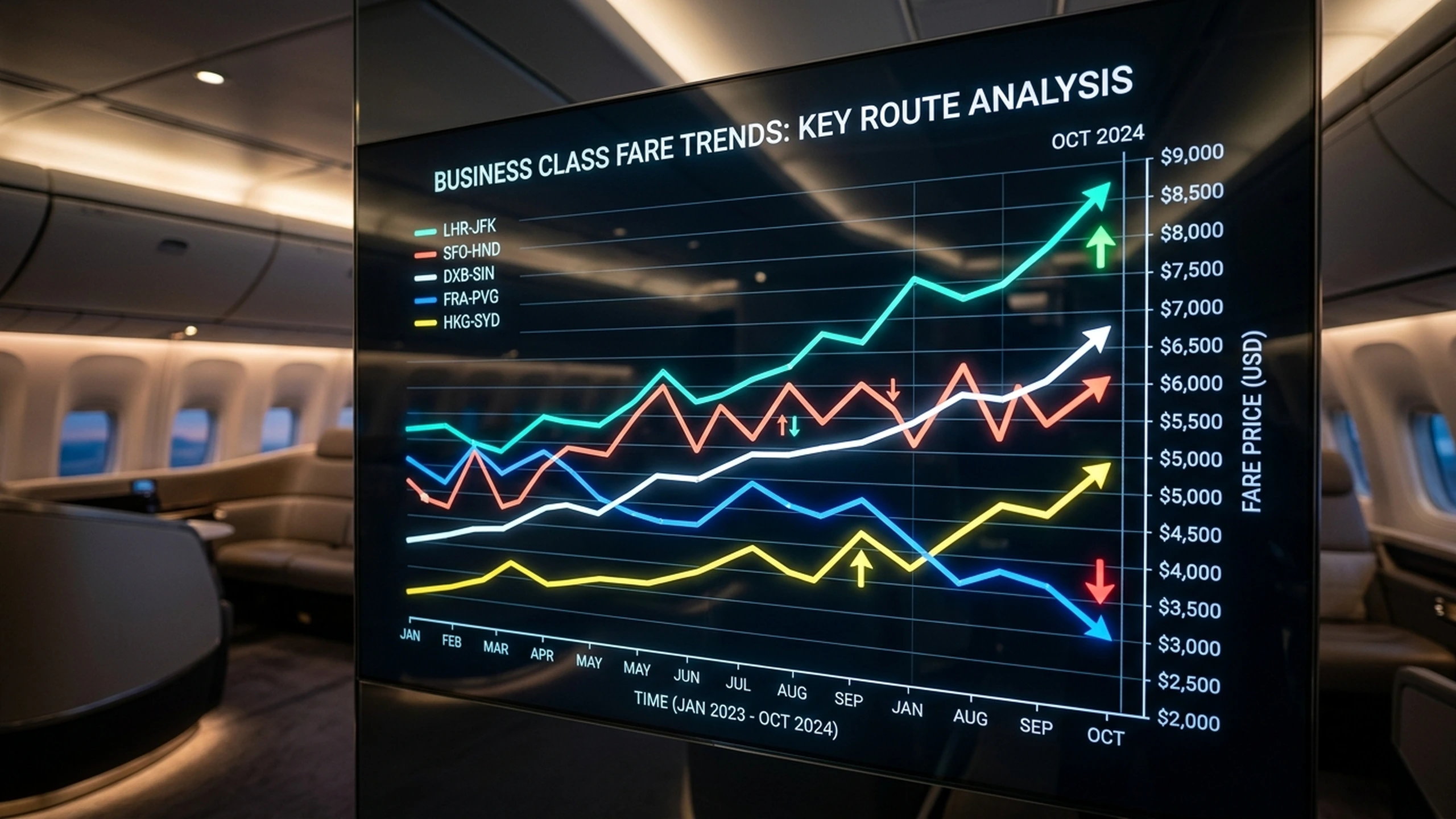
A consolidator fare is a discounted business class ticket that airlines sell in bulk to wholesale travel agencies, who then resell them below published rates. These are real, fully-issued IATA tickets on the same planes and same cabins as everyone else — they just don't show up on Google Flights because airlines don't publish them. BestBusinessClass.com works directly with these consolidator networks to get clients fares that are routinely 30-50% below what you'd find booking directly.
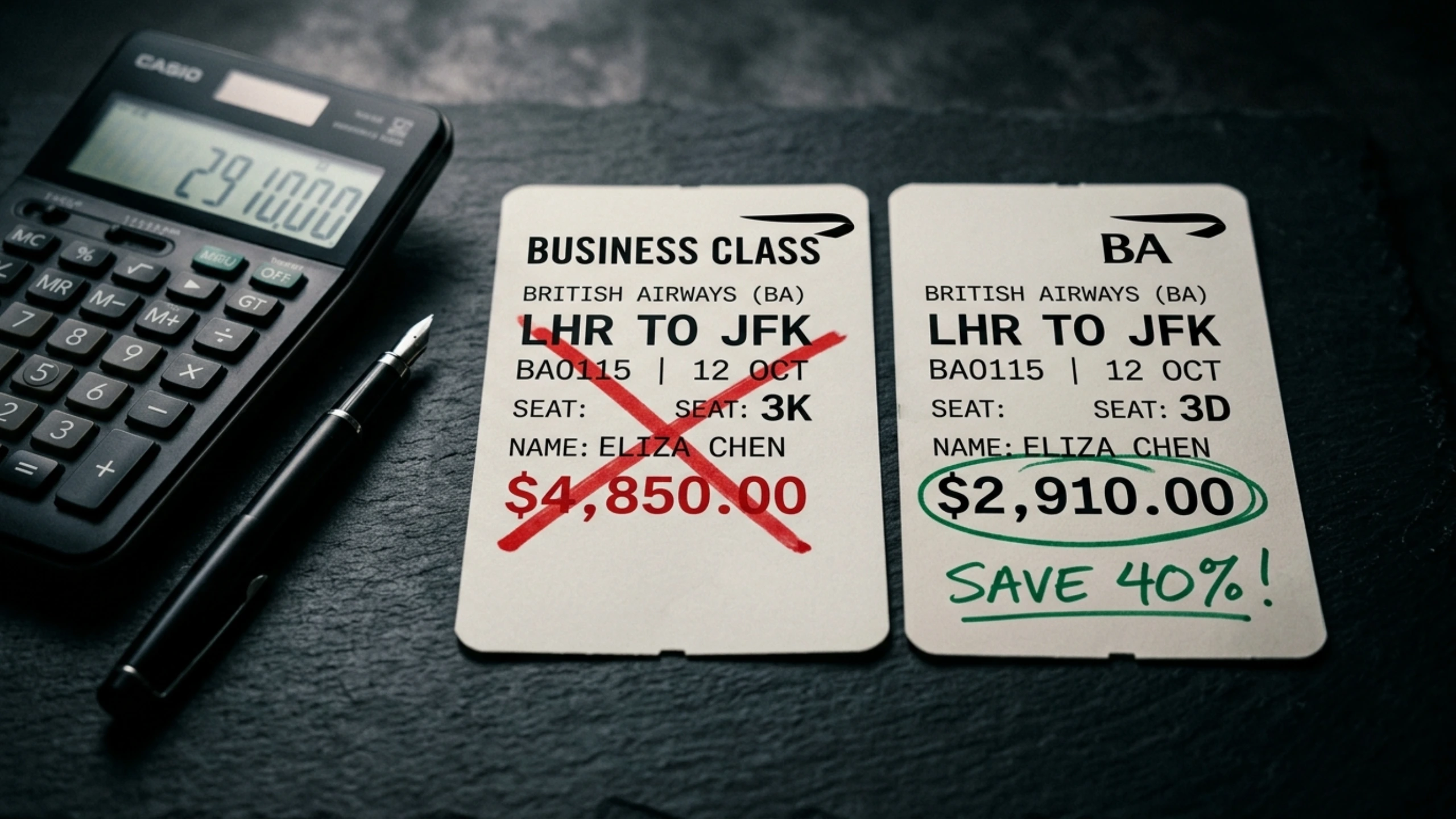
I've been asked some version of "wait, how is this legal?" probably five hundred times in this job. People see a $2,800 fare for a seat that Cathay Pacific is selling for $7,900 on its own website and assume there's a catch. A blackout date. A bait-and-switch. Something.
There isn't. It's just a different pipe the ticket flows through.
What is a consolidator fare, actually?
A consolidator fare is airline inventory sold in bulk, at a wholesale net rate, to a small number of licensed travel agencies (consolidators) who then mark it up modestly and sell it to the public — usually through boutique agencies like ours rather than directly to consumers.

Think of it the way you'd think about hotel rooms sold through Expedia's wholesale contracts versus the rack rate at the front desk. Same room, same bed, different distribution channel. The airline just wants those seats filled and doesn't want the deal advertised next to its full-fare product.
Airlines have been doing this since the 1970s, originally to move empty economy seats after deregulation. Business class consolidator programs got serious in the 2000s once carriers realized premium cabins were the profit engine and empty seats up front were pure lost margin — way more than an empty coach seat.
Glossary check
Want the formal definition? We keep a running one at consolidator fare and a related entry on unpublished fare, since the two terms get used almost interchangeably but aren't quite identical.
Why airlines even do this
Here's the part that surprised me when I first started digging into airline revenue management years ago: airlines routinely overbook premium cabins by 15-20% on long-haul routes, betting on no-shows, upgrades that don't clear, and corporate travelers who cancel last minute.

But that math doesn't always work out. Business class is expensive to fly empty — you're talking about a seat that cost the airline real money to install and maintain, sitting there generating zero revenue at 35,000 feet. So airlines need a release valve that moves inventory without torching the published fare.
If British Airways dropped its JFK-LHR Club Suite fare from $7,200 to $2,800 on ba.com, every corporate travel department in America would notice within a week, and BA would never get $7,200 from anyone again. That fare is gone forever.
Consolidator fares solve this. The airline quietly allocates a block of seats — usually in specific booking classes — to a handful of wholesale partners. Those partners sell at a discount, but the price never touches the airline's own retail channel. The published fare stays intact for the corporate accounts and the walk-up business travelers who don't shop around.
30-50%
Typical discount on consolidator business class fares vs published rates
The fare class thing nobody explains well
This is where it gets a little technical, but stick with me because it matters.
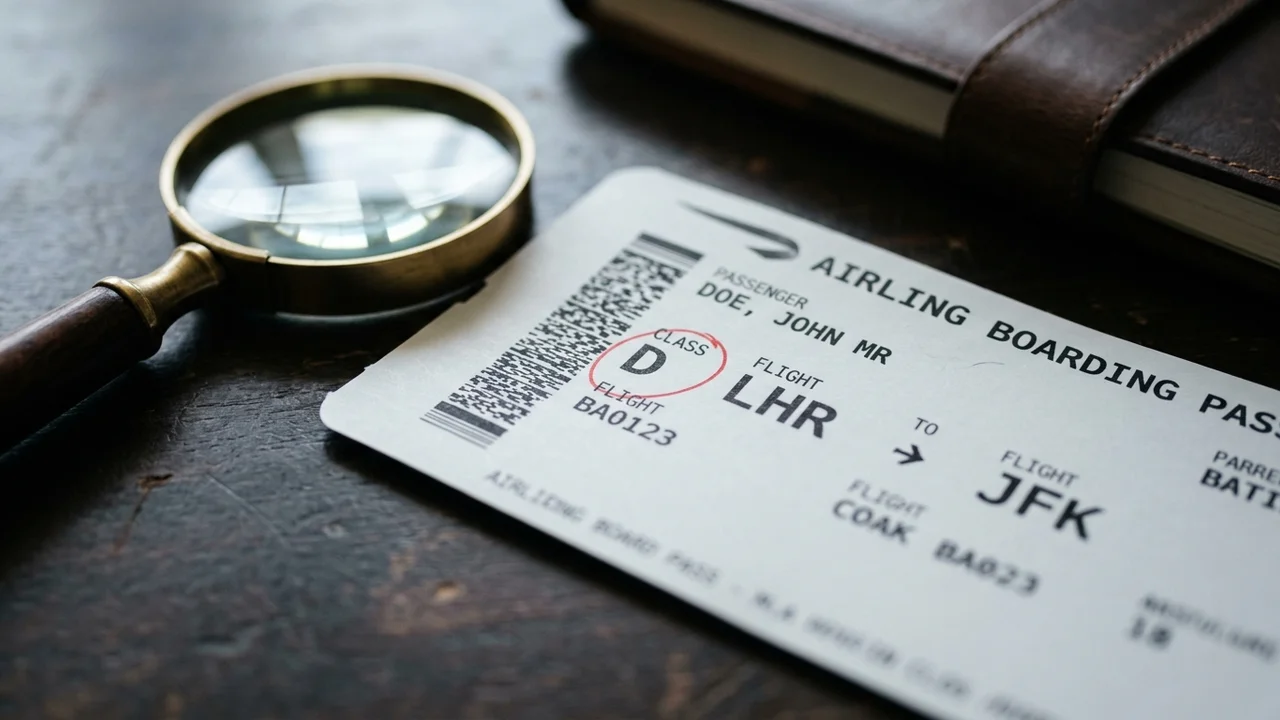
Every airline seat sits in a "booking class" — a letter code that determines the fare rules, mileage earning, and price. Standard published business class usually books into J or C class. That's the top-shelf fare with maximum flexibility, full miles, and the sticker price you see on the airline's own site.
Consolidator inventory typically books into different letters entirely — commonly Z, I, D, or O, depending on the carrier. These are still business class. Same cabin, same seat, same lie-flat suite, same champagne on boarding. What's different is the fare basis code attached to that letter, which carries different change fees, different mileage accrual (sometimes reduced), and different refund rules.
I flew a Cathay Pacific First Class product a few years back — well, business, let's be honest, First is a different article — booked into I class through a consolidator, and the only functional difference from the guy next to me who paid full fare was that my ticket earned 50% mileage instead of 100%, and I couldn't get a same-day standby change without a fee. Everything else — seat, meal order, lounge access, boarding priority — identical.
Pro Tip
Ask your agent which booking class your consolidator fare falls into before you book. It tells you the real story on change fees and mileage — way more useful than the marketing copy.
Are consolidator fares "gray market" or somehow unofficial?
No — and this is the myth I most want to kill. A consolidator fare is a fully-issued IATA ticket, generated in the airline's own reservation system, with a real ticket number that starts with the airline's three-digit code. It shows up in the airline's system when you check in. It counts toward elite qualifying miles in most cases. Flight attendants can't tell the difference and don't care.
What makes it "unpublished" is simply that the fare isn't filed for public display in the standard distribution systems that feed Google Flights, Kayak, or ITA Matrix. It's filed privately, visible only to agencies with consolidator access codes.
That's genuinely it. No gray market, no funny business, no risk of the airline canceling your ticket because they "found out." The airline sold it to the consolidator on purpose. We cover the mechanics in more detail in our guide to how flight consolidators work if you want the long version.
Why you can't just call the airline and ask for this price
I get this question constantly. If it's a real ticket in their system, why won't British Airways just sell it to me directly at $2,800?
Because the airline's own reservation agents and website only have access to published fares. The consolidator rate exists in a separate fare filing that's restricted to specific IATA agency codes — the wholesale partners. It's not hidden from the airline; it's hidden from their own retail channel on purpose, so it doesn't compete with itself.
Airline call center agents genuinely cannot see or sell these fares even if they wanted to. I've tested this myself, calling BA directly after getting a consolidator quote, just out of curiosity. The agent had no idea what I was talking about and quoted me the standard $7,200.
This is really the entire reason agencies like BestBusinessClass.com exist. We hold the IATA accreditation and the consolidator relationships that let us access this second, quieter pricing layer. It's not a discount code. It's a different supply chain.
New York (JFK)London (LHR)
British Airways · Business Class
$2,800
roundtrip
That's a real example from earlier this year — a Club Suite fare, same JFK-LHR route, same fully lie-flat seat with the door, that BA's own site was quoting at $7,200 round-trip. Through a consolidator allocation, our client paid $2,800. Same flight number. Same aircraft, an A350. He sat in seat 4A. Nobody at the gate treated him any differently than the guy who paid full fare in 4K.
Why these fares vanish from Google Flights
This trips people up constantly, so let's be direct about it. Google Flights, Kayak, and every other metasearch tool pulls pricing from the Global Distribution Systems — Sabre, Amadeus, Travelport — using publicly filed fare data. Consolidator fares are deliberately filed as private, agency-only fares, which means they're invisible to that entire scraping infrastructure.
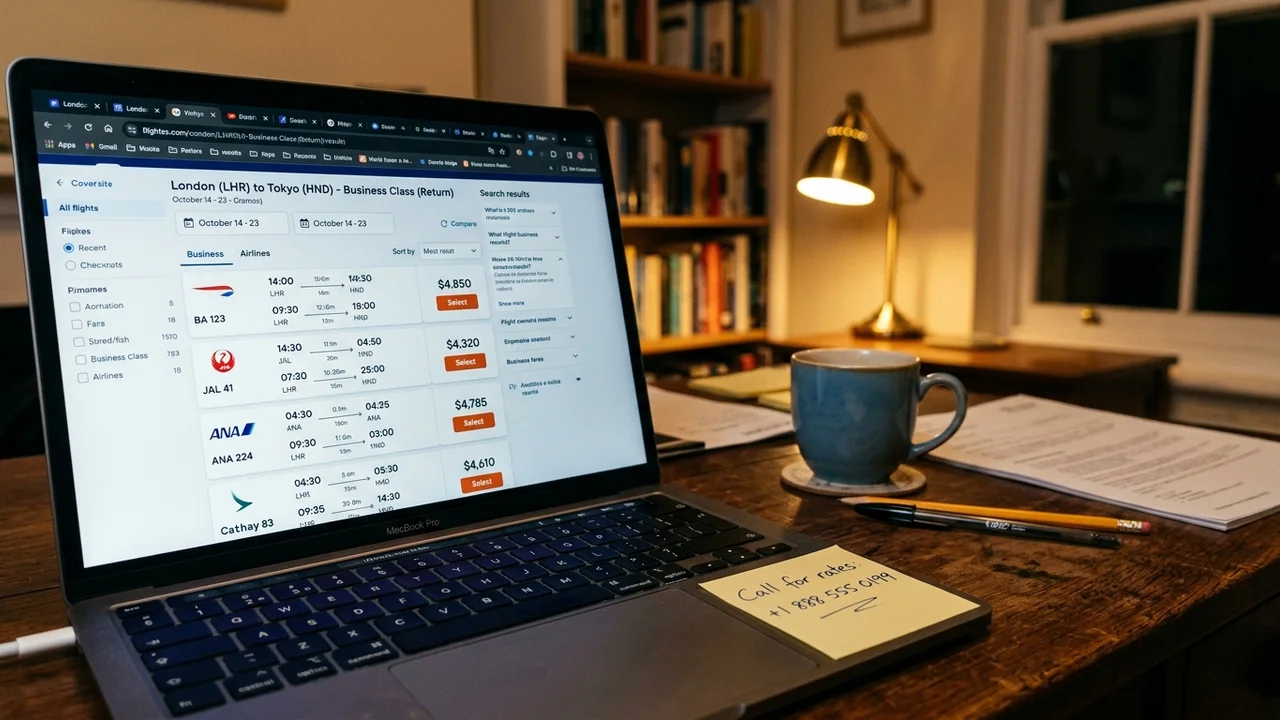
You could search JFK-LHR business class every day for a year on Google Flights and never see the $2,800 fare, because it's not competing in that layer at all. It only becomes visible when a consolidator-accredited agency queries the GDS with the right access codes.
This is also why online booking sites that claim to show "the lowest business class fares" almost never actually do — they're all pulling from the same public fare filings. Browsing current deals through a consolidator desk is a genuinely different search than anything a metasearch engine can do.
A real limitation
Consolidator fares aren't infinite. Airlines release a limited allocation per route per month, and popular routes like JFK-LHR or LAX-NRT can sell out of their consolidator block weeks before departure, especially around peak season. If your dates are rigid, book early — the fare doesn't magically reappear once the block is gone.
Ticket rules you actually need to know
This is the part people skip past and then get annoyed about later, so let me be blunt.
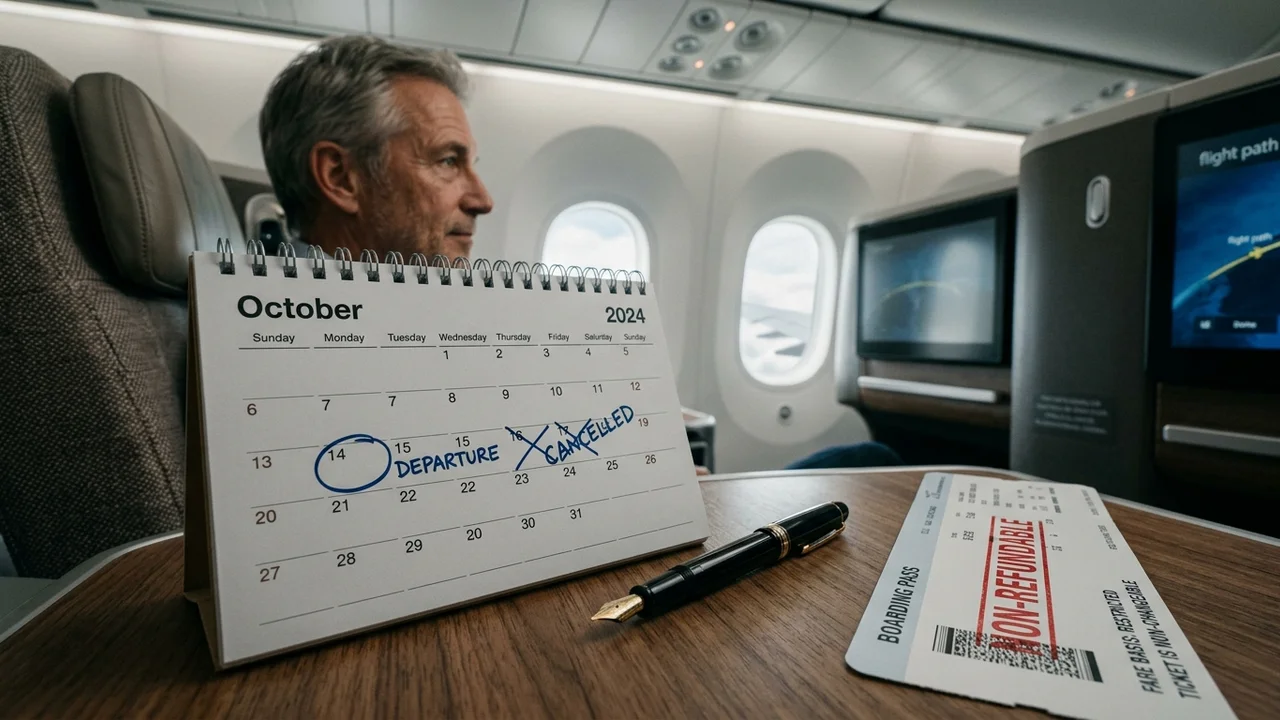
Consolidator fares are usually less flexible than fully published J or C class tickets. Common restrictions include:
- Change fees ranging from $200-500, versus free changes on some full-fare tickets
- Non-refundable in most cases, though changeable for a fee
- Reduced mileage earning — often 25-50% of miles versus 100% on published fares
- Fixed routing — you generally can't add a stopover or open-jaw without repricing
- Advance purchase requirements, typically 3-14 days before departure
None of this is a scandal. It's the tradeoff for the discount, and it's disclosed upfront by any agency worth using. If you need a ticket you can cancel penalty-free the morning of departure, a consolidator fare probably isn't the right tool — a published flexible fare is.
But if you know your dates, as most leisure travelers and even a lot of business travelers do, the tradeoff is a non-issue. I've booked consolidator fares to Tokyo, Singapore, and Doha over the years and never once needed the flexibility I was giving up.
How is a consolidator fare different from a normal airline sale?
This is the other question that comes up a lot, and it's worth separating clearly, because people conflate the two.
A published discount — like when Delta runs a flash sale on One Suite fares — is still filed publicly. Anyone can find it on Delta.com or Google Flights. It's temporary, usually tied to a booking window, and disappears once the promotion ends or Delta decides it's done.
A consolidator fare is never publicly filed at all. It exists year-round (allocation permitting) as a private agency rate, not a promotional blip. It doesn't show up during a "sale" and disappear during a "regular" period — it's simply a parallel, permanently lower price point that the public retail channel never sees.
The practical difference: you can find a published sale fare yourself if you're persistent and lucky with timing. You cannot find a consolidator fare yourself, no matter how good you are at flight searching, because it's not distributed anywhere you have access to.
Which airlines actually run these programs
Not every carrier participates equally, and this matters when you're picking a route. In my experience, the strongest consolidator allocations tend to come from:

- British Airways — especially transatlantic Club Suite fares out of the US
- Qatar Airways — generous allocations on Doha connections to Asia and Africa, and genuinely one of the better hard products out there; I wrote up the seat and service specifics in our Qatar Airways business class review
- Turkish Airlines — surprisingly deep consolidator inventory to Southeast Asia and Africa via Istanbul
- Air France/KLM — solid on transatlantic and West Africa routings
- Cathay Pacific — reliable Hong Kong connecting fares to broader Asia
Carriers that tend to be stingier with consolidator releases: Emirates, Singapore Airlines, and most US carriers on domestic-only routings, where premium demand is high enough that they don't need the release valve.
If you're flexible on carrier, that flexibility is honestly where most of the savings live. We go deeper on route-specific pricing patterns in our New York to London route guide, and for anyone hunting Asia fares specifically, business class to Tokyo tends to have some of the best consolidator depth we see all year.
Pro Tip
Tell your agent you're flexible on airline alliance, not just dates. A lot of the best consolidator pricing sits on carriers people don't think to ask for by name.
What this actually looks like when you book
I want to be honest about the process because it's not instant like clicking "buy" on Expedia.
You call or submit a request, an agent with consolidator access runs the route through the private fare filings, and you get a quote — usually within a few hours, sometimes same-call if the desk is quiet. Payment goes through the agency, not the airline directly, though the ticket itself is issued in the airline's own system under your name with a standard ticket number.
You'll get a real PNR, a real confirmation, and you can look it up on the airline's own app once it's ticketed. Seat selection, meal preferences, and lounge access all work exactly like any other business class booking.
The one thing that trips up first-timers: because it's not a self-service platform, you don't get the instant gratification of seeing 40 fare combinations on a screen. You're trusting an agent to search the private inventory correctly, which is exactly why the agency's access and relationships matter so much more here than with a normal booking.
For the fuller mechanics of how the wholesale relationships actually function — who consolidators are, how they get their allocations, what a net fare agreement looks like — our guide to how flight consolidators work covers it in more detail than I have room for here.
Call (855) 815-4774 to see what consolidator fares are available on your route
Call NowI'll say this plainly because I think it gets lost in a lot of the marketing around discounted business class: this isn't a trick, and it isn't a workaround that could disappear tomorrow. It's a distribution channel that's existed for decades and that most travelers simply never encounter because it's not built for self-service search. Knowing it exists is most of the battle. The rest is just having someone on the phone who can actually access it.
This article was created with AI assistance and reviewed by our editorial team.
#consolidator-fare#booking-strategy#savings#unpublished-fares#how-it-works
Enjoy our content? Make us a preferred source on Google.
Business class deals, delivered
Join savvy travelers who receive exclusive deals, route tips, and insider knowledge. Free, weekly, no spam.
Unsubscribe anytime. We respect your inbox.
By submitting, you agree to our Privacy Policy and Terms of Service.
Ready to book your business class flight?
Our specialists access unpublished fares and save you up to 40% on premium cabins.